
How Nebraska’s LB935 Court Cost Increase Affects Injury Claims in 2026
Rising Court Costs and Your Nebraska Driving Privileges After a Crash
Key Takeaways: Nebraska’s LB935 is drawing attention in 2026 for adjusting civil court costs, and that shift matters for anyone weighing whether to file an injury lawsuit. Filing fees and court costs are only one part of the financial picture, and they operate alongside long-standing rules on deadlines and fault. Nebraska follows a modified comparative negligence standard that reduces or bars recovery based on a claimant’s share of fault. Most injury actions must be filed within four years, though shorter deadlines apply to certain claims. Tolling and discovery exceptions exist but are interpreted narrowly. Understanding these rules early can help injured people protect both their claims and their Nebraska driving privileges.
Court costs rarely make headlines, but for injured Nebraskans they can influence when and how a case moves forward. As discussion around LB935 and Nebraska court costs 2026 continues, many people recovering from car, motorcycle, or truck crashes are asking a practical question: will higher civil filing fees change my ability to pursue compensation? The answer, in most cases, is that cost adjustments affect timing and budgeting rather than the underlying legal rights, which remain governed by Nebraska statutes and case law. For someone facing mounting medical bills and lost wages, even modest increases in injury lawsuit costs can feel significant, which is why acting promptly generally matters.
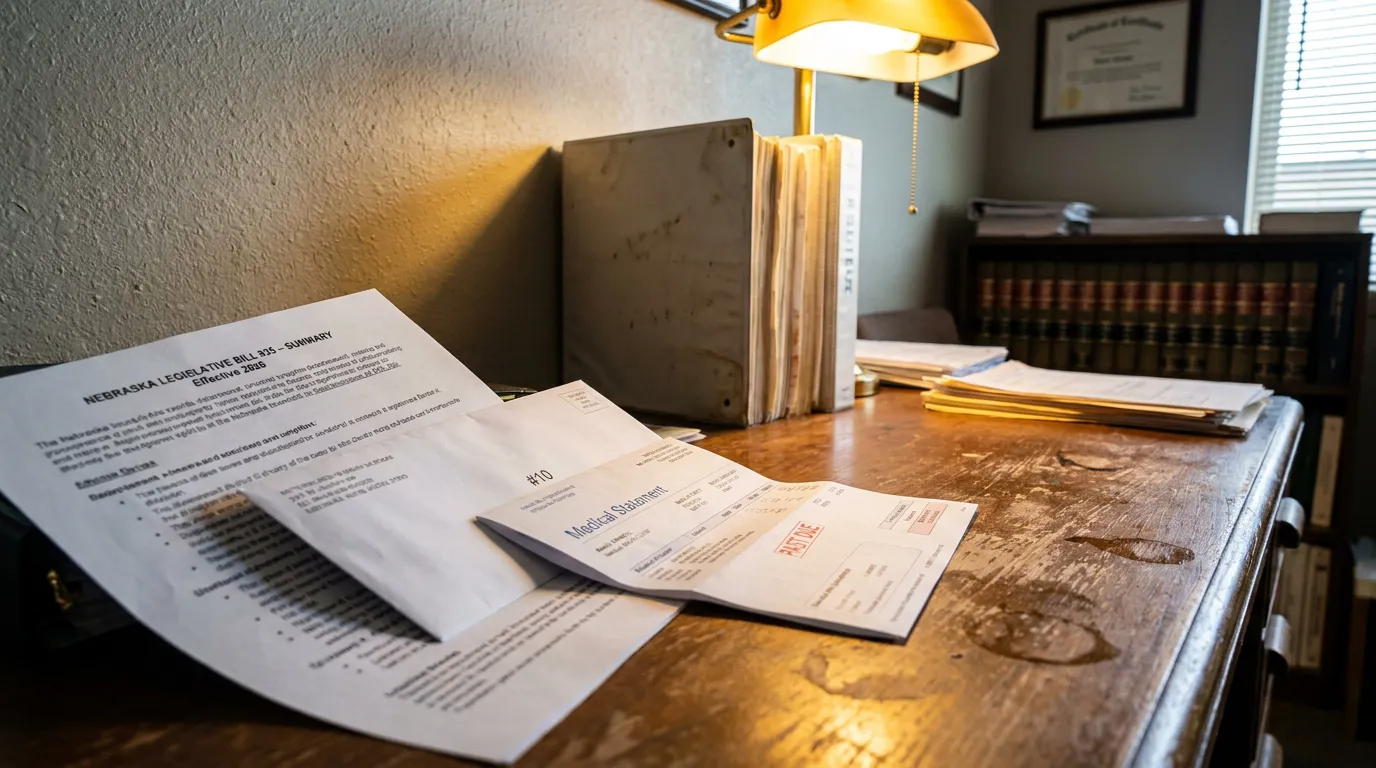
What LB935 Signals for Nebraska Civil Litigation Reform
Legislative measures that adjust civil filing fees Nebraska litigants pay are part of a broader conversation about court funding and access. While the label "Nebraska civil litigation reform" covers many possible changes, the core takeaway for plaintiffs is that court costs are procedural expenses tied to filing and maintaining a lawsuit, not a redefinition of who can recover. In practice, injured people usually encounter these costs at the outset of litigation, and they are separate from attorney fees or the value of a claim. Because outcomes depend on the specific facts of each matter, it is wise to confirm current fee schedules with the clerk of the court before filing.
The substantive rules that decide injury cases sit in Nebraska’s statutes, not in a court cost provision. Nebraska applies a modified comparative negligence standard, meaning an injured claimant’s damages are reduced in proportion to their share of fault. Under the framework set out in the state’s comparative negligence statute, recovery is entirely barred if the claimant’s negligence equals or exceeds the combined negligence of all defendants, a rule often called the fifty percent bar. This makes fault allocation a central, litigated issue, and juries generally must be instructed on the effect of allocating negligence.
How Deadlines Shape a Personal Injury Claim Nebraska Residents Bring
Timing is often the single most important factor in preserving a personal injury claim Nebraska residents pursue. Section 25-207 generally sets a four-year window for tort and injury-related actions, so most Nebraska injury lawsuits must be filed within four years of the injury regardless of any 2026 court cost changes. You can review the language of the four-year limitations statute directly on the Nebraska Legislature’s site. Because a claim generally accrues when the damage occurs rather than when the cause is discovered, waiting can quietly erode your options.
Not every claim shares the same clock, and the differences can be substantial. Nebraska imposes a two-year statute of limitations for professional negligence, including medical malpractice, with a one-year discovery exception and an absolute ten-year outer limit. Workers who are hurt on the job face a separate two-year deadline for workers’ compensation claims, which is a distinct administrative process rather than a standard civil tort suit. Distinguishing among these deadlines matters, because missing the correct one can bar recovery even when the injury is serious.
When Tolling and Discovery Exceptions May Apply
Courts do recognize limited circumstances in which a deadline may be extended, but they interpret these exceptions narrowly. The one-year discovery exception can toll the statute of limitations only when an injured party did not discover and could not reasonably have discovered the existence of the cause of action within the ordinary window. Tolling protections may also apply to minors and persons under a legal disability, potentially extending the period until the disability is removed or the minor reaches majority. None of these exceptions applies automatically, and a plaintiff generally carries the burden of showing that the exception fits the facts.
A Hypothetical: A Bellevue Driver Weighs the Cost of Filing
Imagine Maria, a delivery driver near Bellevue, who is rear-ended at an intersection and suffers a shoulder injury that keeps her off work for weeks. Her medical bills climb, the insurer offers far less than her losses, and she reads news about LB935 and worries that rising civil filing fees will price her out of justice. In reality, the filing fee is a modest fraction of what her case involves, and the larger questions are proving the other driver’s fault, documenting her treatment, and filing within the applicable deadline. For Maria, the practical move is to preserve evidence early and understand how comparative fault could affect her recovery.
Maria’s situation also shows why documentation drives value in July 2026 Nebraska law claims. Insurers frequently argue that a plaintiff shares fault, and under Nebraska’s comparative system, even a partial fault finding reduces damages. Gathering the police narrative, photographs, and medical records helps counter lowball offers, and understanding why Nebraska crash reports cost thirteen dollars can help injured people see how a small expense supports a stronger claim. Careful records also protect a driver’s ability to work and, in related traffic matters, to maintain Nebraska driving privileges after a collision.
Practical Steps to Protect Your Claim and Your Nebraska Driving Privileges
A few disciplined habits generally strengthen an injury case while court costs and rules evolve. Because outcomes are fact-dependent, these steps are general guidance rather than individualized advice, and they should be adapted to your circumstances. Consider the following:
- Seek prompt medical care and keep every bill, referral, and treatment note to establish causation and damages.
- Preserve evidence such as photos, witness contacts, and the official crash report before it disappears.
- Track your deadlines carefully, since the four-year rule, two-year malpractice rule, and workers’ compensation window differ.
- Document lost income and out-of-pocket expenses, including any costs tied to protecting your Nebraska driving privileges.
- Confirm current filing fees with the court clerk so budgeting reflects the latest Nebraska court costs 2026 schedule.
Why Fault Allocation Deserves Early Attention
Fault allocation can decide whether a claim succeeds, so it deserves attention from day one. Under the state’s comparative negligence provision, damages are reduced by the claimant’s percentage of fault, and reaching or exceeding the combined fault of all defendants bars recovery entirely. This is not a technicality that resolves itself, because the jury generally must be instructed on how its allocation affects the award. Building a clear liability narrative early can reduce the risk that a defendant successfully shifts blame.
One Accident, One or More Claims
A single crash can generate both property damage and personal injury, raising questions about how many claims exist. Nebraska law has long grappled with whether an injured party has one cause of action or several, and the rule against splitting a single cause of action means a judgment on one claim can bar a later related claim. Insurer subrogation can add complexity when a company reimburses property damage and sues as subrogee, potentially affecting a later injury action. Coordinating these issues at the outset helps avoid procedural traps that could otherwise foreclose recovery.
How Does This Impact Me?
What Does LB935 Actually Change for My Injury Case?
LB935 primarily concerns court costs rather than your right to recover. In many cases, the practical effect is a change to filing fees and related expenses, which are separate from the value of your claim. The substantive rules on fault and deadlines generally remain governed by existing statutes, so the strength of your case still turns on evidence and timing.
Does the 2026 Cost Increase Change My Deadline to File?
No, court cost changes generally do not alter statutory deadlines. Most injury actions still fall under the four-year window, while malpractice and workers’ compensation claims follow shorter periods. Because accrual and tolling can be fact-specific, confirming your deadline early is a prudent step.
Will Rising Costs Price Me Out of a Personal Injury Claim?
For most claimants, filing fees are a small part of overall injury lawsuit costs. Many injury attorneys handle cases on a contingency arrangement, though fee structures vary and should be discussed directly. The larger financial concern is usually proving damages, not the court cost itself.
How Does Fault Affect What I Can Recover?
Your recovery may be reduced by your percentage of fault, and eliminated if it equals or exceeds the defendants’ combined fault. This makes early evidence gathering important. Courts consider the specific facts, so allocation is rarely automatic.
Moving Forward as Nebraska’s Court Cost Rules Evolve
The headlines about LB935 are a useful reminder that timing, documentation, and fault allocation remain the real drivers of an injury case. Court cost adjustments may influence budgeting and strategy, but they do not rewrite the four-year filing rule, the comparative negligence standard, or the narrow exceptions that courts apply with caution. Because every situation depends on its own facts, injured Nebraskans benefit from understanding these rules before deadlines pass. To learn more about how a firm approaches these matters, you can review this overview of Personal Injury in Nebraska and how claims are typically handled.
If your situation may be affected by these developments, the team at Kent | Pincin is available to answer questions about your options. You can call [(402) 243-5535]((402) 243-5535) or reach out through our contact page to discuss how current Nebraska rules may apply to your circumstances.