
Reckless Homicide Charge in Madison Pedestrian Death Supports Injury Claims
When A Reckless Homicide Charge And The Wisconsin Direct Action Statute 632.24 Reshape A Pedestrian Injury Case
Key Takeaways: A criminal reckless homicide charge in a Madison pedestrian death can strengthen a parallel civil claim, but the two proceedings remain legally distinct. Wisconsin applies a modified comparative negligence rule that reduces, and sometimes bars, recovery based on the victim’s share of fault. The wisconsin direct action statute 632.24 may allow injured people and grieving families to name an insurer directly in a lawsuit. Strict filing deadlines apply, with wrongful death claims for auto-related deaths generally following a shorter period than standard personal injury cases. Fault allocation among multiple defendants follows precise statutory thresholds.
A recent reckless homicide prosecution tied to a fatal pedestrian crash on East Washington Avenue has drawn renewed attention to how criminal charges intersect with civil recovery in Dane County. For families in Madison, the news raises an urgent question: what does a criminal case mean for a private compensation claim? While a prosecution and a civil suit run on separate tracks, developments in one can meaningfully influence the other.
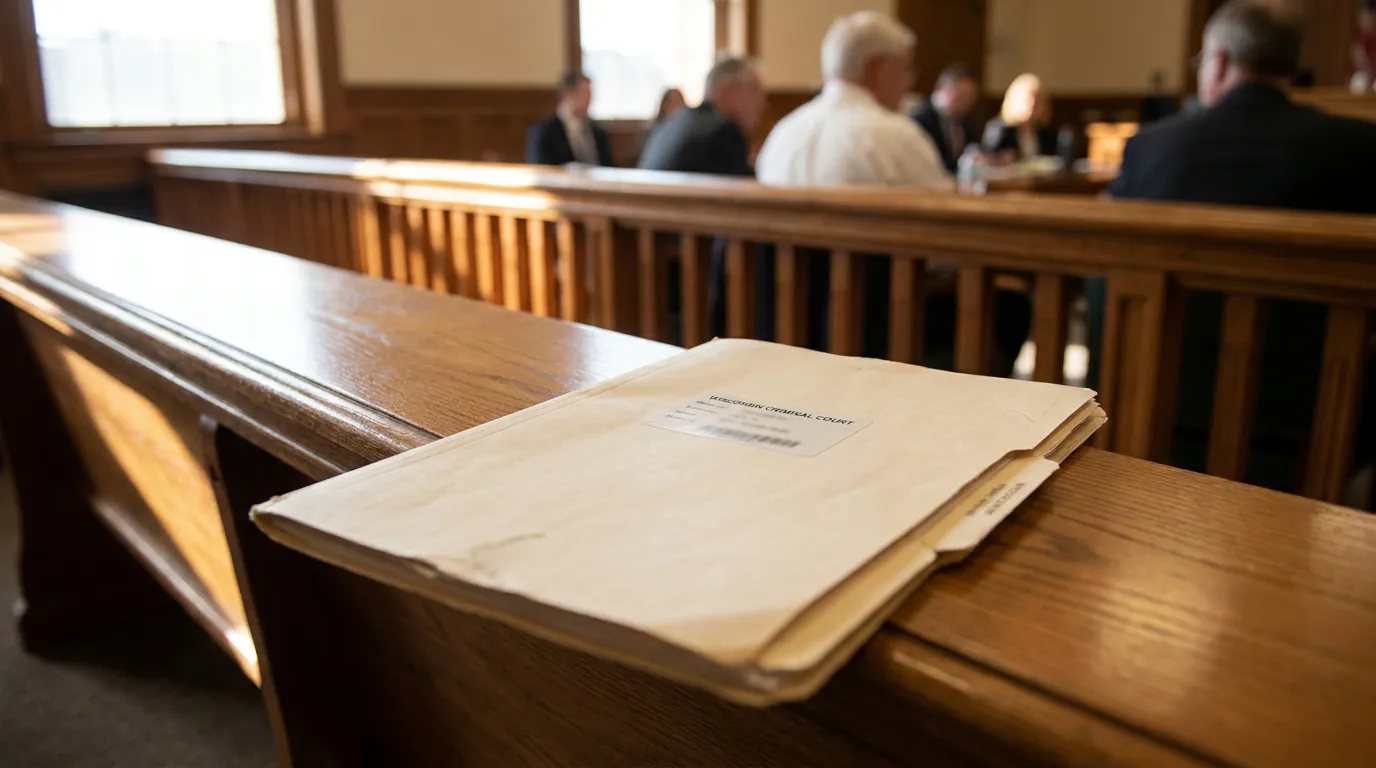
Why A Criminal Charge Matters To A Civil Pedestrian Claim
A reckless homicide charge and a civil injury claim answer different legal questions, even when they arise from the same collision. The criminal case asks whether the state can prove guilt beyond a reasonable doubt, while a civil claim asks whether a defendant is liable by a preponderance of the evidence, a lower standard. Because of that gap, a driver can face civil liability even without a criminal conviction, and a conviction may be admissible as evidence of fault in a related civil matter, though it does not automatically establish civil liability.
Wisconsin resolves civil fault through a modified comparative negligence system with deep historical roots. Legal scholarship notes that Wisconsin has a long and storied history of comparative negligence law, dating back to 1931 when the statute creating the rule was first enacted. That framework governs how much an injured pedestrian, or the family in a wrongful death pedestrian case, can ultimately recover.
The controlling civil rule appears in Wis. Stat. § 895.045, which sets the boundaries of recovery. Under the modified comparative negligence standard, contributory negligence does not bar recovery if that negligence was not greater than the negligence of the person against whom recovery is sought, but any damages allowed are diminished in proportion to the amount of negligence attributed to the person recovering. In plain terms, a pedestrian who is partly at fault may still recover, subject to a reduction, but is barred entirely if their negligence exceeds that of the defendant.
How Fault Allocation Works Under Wisconsin Law
Wisconsin measures each defendant’s negligence separately rather than lumping defendants together. The statute directs that the negligence of the plaintiff shall be measured separately against the negligence of each person found to be causally negligent. This matters when more than one party may share responsibility.
Case law reinforces that separate, defendant-by-defendant comparison. Courts have held that to determine liability, a plaintiff’s causal negligence is to be examined separately in relation to the causal negligence of each defendant. That principle, drawn from Reiter v. Dyken, can affect whether a victim clears the comparative fault threshold against a particular defendant.
Joint liability rules then determine who pays what. A defendant found less than 51% causally negligent is limited to the percentage of total causal negligence attributed to that person, while a defendant found 51% or more causally negligent is jointly and severally liable for the damages allowed. These thresholds were shaped by 1995 Wisconsin Act 17, which codified previous court interpretations and partially eliminated the doctrine of joint and several liability.
Key points that commonly shape a Madison pedestrian claim include:
- Separate comparison: each defendant’s fault is compared individually to the victim’s.
- The 51% bar: recovery is permitted only if the plaintiff’s negligence was not greater than the defendant’s.
- Proportional reduction: any award is trimmed by the victim’s share of fault.
- Joint liability threshold: only a defendant at 51% or more may be reached for the full award.
A Realistic Madison Scenario
Imagine a Madison resident crossing near East Washington Avenue at dusk who is struck by a driver later charged with reckless homicide. The family faces overwhelming grief, mounting medical and funeral costs, and pressure from an insurer eager to settle quickly.
In this situation, the criminal charge does not automatically resolve the civil case, but it can supply valuable evidence. Police reports, accident reconstruction, toxicology results, and witness statements gathered by prosecutors may support the civil claim’s showing of reckless driving fault. At the same time, the defense may argue comparative negligence, contending the pedestrian shared some responsibility, which is exactly why preserving independent evidence early is so important. For families weighing next steps, reviewing coverage on a similar tragedy involving a pedestrian death East Washington Avenue can offer useful context.
How The Wisconsin Direct Action Statute 632.24 Can Support Recovery
The wisconsin direct action statute 632.24 is a distinctive feature of state law that can reshape how a pedestrian injury claim Madison families pursue proceeds. This provision makes a liability insurer directly liable and allows an injured person to name that insurer in a lawsuit, rather than being limited to suing only the at-fault driver, so long as the injury occurs in Wisconsin. That option can matter greatly when a driver’s personal assets are limited but an insurance policy exists.
In practice, direct action under 632.24 can streamline how compensation is pursued and paid. By bringing the insurer into the case, an injured pedestrian or a family in a wrongful death pedestrian claim may address coverage disputes and liability in the same proceeding. The statute applies to policies covering liability for negligence, and how it applies depends on the policy terms, the parties, and the facts.
Even where the wisconsin direct action statute 632.24 applies, comparative negligence and policy limits still govern the recovery. Naming an insurer does not change the underlying fault analysis under § 895.045, nor does it guarantee any particular payment. It simply provides a procedural avenue that can be significant in Auto Accidents in Madison/WI when coverage is a central concern.
Deadlines That Can Make Or Break A Claim
Filing deadlines in Wisconsin are strict, and missing one can permanently bar a claim. For most injury matters, the personal injury statute of limitations requires action. An action to recover damages for injuries to the person, including injuries arising from an accident involving a motor vehicle, generally must be commenced within three years or be barred.
Wrongful death claims tied to motor vehicle crashes follow a different, shorter clock. For deaths resulting from motor vehicle accidents, a shorter two-year deadline generally applies under Wis. Stat. § 893.54(2m), an important distinction for a pedestrian fatality wrongful death claim. Because these periods differ, survivors should confirm which deadline governs their specific circumstances.
A discovery rule may affect when the clock starts, but courts interpret such exceptions narrowly. Annotations to the statute indicate the limitations period may begin when a plaintiff has sufficient evidence that a wrong has been committed by an identified person. This does not mean tolling applies automatically, and relying on it without careful review can be risky.
Building A Strong Pedestrian Injury Claim
Strong claims are built on evidence, not assumptions, and the work often begins immediately after a crash. Medical records document the nature and extent of injuries, while photographs, video, and witness accounts help establish how the collision occurred. Preserving this proof early can be decisive if an insurer later disputes fault or severity.
Insurer pushback is common, and anticipating it is part of ethical plaintiff advocacy. Adjusters may emphasize comparative negligence to reduce a payout, which is why organized documentation and, in many cases, accident reconstruction can matter. Working with a knowledgeable wisconsin direct action statute 632.24 lawyer can help a family understand its options without overpromising any result.
How Does This Impact Me?
What Does A Reckless Homicide Charge Mean For My Civil Claim?
A criminal charge does not decide your civil case, but it can help. Evidence developed in the prosecution may support your showing of fault, though your civil claim still requires its own proof and remains subject to comparative negligence rules.
Can I Still Recover If The Pedestrian Was Partly At Fault?
Possibly, depending on the percentage of fault assigned. Under Wisconsin law, recovery is generally allowed if the victim’s negligence was not greater than the defendant’s, with any award reduced in proportion to that fault.
Does This Change My Deadline To File?
It might, because auto-related wrongful death claims often follow a shorter period. Many injury claims fall under a three-year window, while motor vehicle death claims generally follow a two-year deadline, so confirming your specific timeline promptly is important.
Why Would I Name An Insurance Company Directly?
Wisconsin’s direct action provision can allow it under certain circumstances. Naming the insurer may help resolve coverage and liability together, though policy terms and the facts of your case determine whether that path is available.
What Should I Do Next After A Fatal Or Serious Crash?
Focus on preserving evidence and understanding your deadlines. Gather medical and accident records, avoid giving recorded statements without guidance, and seek a case-specific evaluation, since outcomes depend heavily on the particular facts.
Turning Legal Framework Into Practical Next Steps
The intersection of a reckless homicide prosecution, comparative negligence, and Wisconsin’s direct action provision creates both opportunities and pitfalls for injured people and grieving families. A criminal charge can bolster a civil claim, but liability, fault allocation, and coverage still turn on the statutes and the evidence. Deadlines are unforgiving, and exceptions such as the discovery rule are applied narrowly.
If this news affects you or your family, reliable guidance can help you understand your options. The team at Kent | Pincin is recognized for handling auto accident and pedestrian injury matters in Madison and throughout Wisconsin. To discuss how these developments may apply to your situation, call 608.999.4954 or contact us today for more information.