
Can Not Wearing a Seat Belt Reduce My Injury Settlement in Nebraska?
How Nebraska Limits the Seat Belt Defense in Injury Claims
Key Takeaways: Not wearing a seat belt can reduce your injury settlement in Nebraska, but Neb. Rev. Stat. § 60-6,273 caps that reduction at five percent of the damages awarded. Seat belt evidence can be used only to mitigate damages. It cannot be used to prove that you caused the crash or to establish comparative fault. The defense generally has to prove that not wearing a belt actually made your specific injuries worse, and a jury may decide no reduction is appropriate at all. Insurers sometimes overstate the seat belt issue to push for lower settlements than the law allows, so evidence like medical records, vehicle damage photos, and crash reconstruction can be key to pushing back. Nebraska generally allows four years to file a personal injury lawsuit, but claims involving government entities have shorter deadlines and separate requirements.
Not wearing a seat belt can reduce your injury settlement in Nebraska, but generally only by a small, legally capped amount. Under Nebraska law, evidence that an injured person was unbelted may be used only to reduce damages, and the reduction cannot be more than five percent of the damages awarded. Insurance adjusters still raise the seat belt issue, sometimes to push for a much lower settlement than the law allows. If someone else caused your crash and you were unbelted, you may still have a viable claim.
If an insurer is using your seat belt use against you, Kent | Pincin can review your claim and explain your options. Call (402) 243-5535 or contact us now to talk about your case.
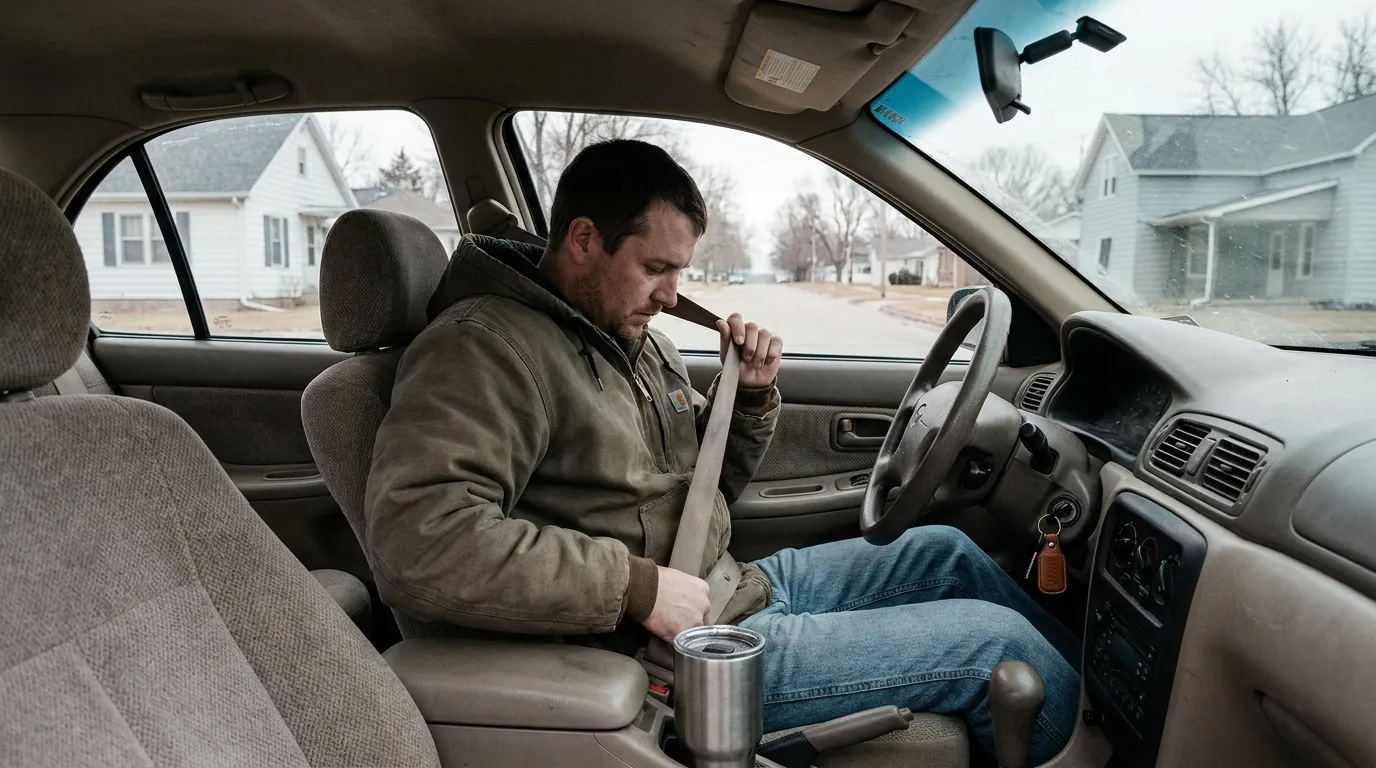
What Nebraska 60-6,273 Says About Unbelted Victims
The main statute is Neb. Rev. Stat. § 60-6,273, and it sets narrow limits on seat belt evidence. Under this section, evidence that a person did not use an occupant protection system, as required by the seat belt statutes, may be admitted only to mitigate damages. The person must have sustained injuries in a motor vehicle accident, and the reduction cannot exceed five percent of the damages awarded. Seat belt evidence cannot be used to prove that you caused the crash.
This matters because a Nebraska injury claim often turns on who caused the collision. A driver who ran a red light or rear-ended you may be found responsible whether or not you had your belt on. The seat belt question generally goes only to whether some of your injuries could have been avoided. Our firm has written more about how seat belt defense evidence affects damages, and the key point is the same: the law treats it as a limited mitigation issue.
The Burden Falls on the Defense
The defense generally has to prove a connection between not wearing a belt and your injuries. Courts typically expect the defendant to present competent evidence, often from medical or biomechanical experts, that a seat belt would have prevented or lessened specific injuries. If the injuries would have happened anyway, such as leg injuries from a crushed footwell or harm from a side-impact intrusion, the argument may fail.
Why the 5 Percent Seat Belt Cap Matters
The 5 percent seat belt cap sets a firm upper limit on any reduction. If a jury awarded $200,000 in damages and found seat belt nonuse relevant, the reduction could not be more than $10,000. A jury could also decide that no reduction is appropriate at all. Insurers who claim your case is worth half as much because you were unbelted may be overstating what Nebraska law allows.
Seat Belt Mitigation Versus Comparative Negligence
Seat belt mitigation and comparative negligence are separate legal concepts in Nebraska. Nebraska’s comparative negligence statutes, Neb. Rev. Stat. §§ 25-21,185.07 through 25-21,185.12, reduce your damages in proportion to your share of negligence. Under § 25-21,185.09, you cannot recover if your negligence is equal to or greater than the total negligence of all defendants. Because § 60-6,273 limits seat belt evidence to mitigation, being unbelted should not be counted as comparative negligence.
| Issue | Seat Belt Mitigation (§ 60-6,273) | Comparative Negligence (§ 25-21,185.09) |
|---|---|---|
| What it addresses | Whether injuries were made worse by nonuse | Who caused the collision |
| Maximum reduction | 5 percent of damages | Proportional to fault; recovery barred if plaintiff’s negligence equals or exceeds defendants’ combined negligence |
| Who must prove it | Generally the defense | Generally the party alleging fault |
| Can it bar recovery entirely? | No | Yes, in some circumstances |
Insurers sometimes blur these two ideas during negotiations. An adjuster may suggest that being unbelted makes you "partly at fault" in the same way as speeding or distracted driving. That argument does not match the statute. If your own driving played a part in the crash, though, comparative negligence may still apply separately.
What Research Shows About Seat Belts and Injury Severity
Public health research consistently finds that seat belts reduce serious injuries and deaths in crashes. Reports from the CDC on seat belt use have long linked belt use to fewer crash-related injuries and fatalities. Defense lawyers and insurers often cite this data to argue that an unbelted victim’s injuries were more severe than they would otherwise have been. These are general, national findings. They do not prove what would have happened in your particular crash.
Other research supports the same general point, but it also leaves room to challenge the defense. One study on seat belt use estimates national rates of seat belt use, while separate clinical and epidemiological research examines how belt use relates to the type and severity of crash injuries. Studies like this describe patterns across many crashes. Under § 60-6,273, the question is whether nonuse affected your specific injuries, and that usually takes case-specific evidence.
Enforcement rules also shape how seat belt use gets documented. Nebraska enforces its adult seat belt requirement under Neb. Rev. Stat. § 60-6,270 only as a secondary action under § 60-6,271. That means officers generally cannot stop a driver only for an adult belt violation, though child restraint rules are enforced differently. A crash report may note belt use based on officer observation or statements made at the scene, and those notes are sometimes wrong.
💡 Pro Tip: Ask for a copy of the crash report and check the occupant restraint field. If it says you were unbelted and you were not, tell your attorney right away so they can look for physical evidence, such as belt webbing marks or bruising patterns, that may correct the record.
Building a Strong Nebraska Seat Belt Defense Car Accident Response
An effective response to a seat belt argument often involves solid evidence about how the crash happened and how you were hurt. A Nebraska seat belt defense car accident dispute often comes down to injury mechanics, meaning how the forces of the impact caused each injury. Useful evidence may include:
- Medical records that connect each injury to the specific impact
- Photos of vehicle damage, especially intrusion into the passenger area
- Event data recorder (black box) information, when available
- Witness statements about the collision and its severity
- Accident reconstruction and testimony from treating physicians
Preserving this evidence early can make a real difference in settlement value. Vehicles get repaired or salvaged, and data recorders can be overwritten. An attorney can send preservation letters and arrange inspections before key evidence is lost.
Common Insurer Tactics to Watch For
Adjusters may raise the seat belt issue early, sometimes before reviewing your medical records. They may ask recorded questions about your belt use or suggest that your injuries "would not have happened" with a belt on. You generally do not have to give a recorded statement to the other driver’s insurer, although your own policy may require you to cooperate with your insurer. Talking with an attorney first can help protect your settlement.
Deadlines That Can Affect Your Nebraska Injury Claim
Nebraska generally allows four years to file a negligence lawsuit for personal injury under Neb. Rev. Stat. § 25-207. Other deadlines can apply. Wrongful death claims, for example, generally must be filed within two years. Claims against government entities follow different rules. Under the Political Subdivisions Tort Claims Act, Neb. Rev. Stat. § 13-919, a written administrative claim generally must be filed with the governing body within one year after the claim accrued, and any lawsuit must then be filed within two years. Under the State Tort Claims Act, Neb. Rev. Stat. § 81-8,227, a written administrative claim generally must be filed with the Risk Manager within two years after the claim accrued.
💡 Pro Tip: If a city bus, county vehicle, or poorly maintained public road played a role in your crash, talk to an attorney promptly. Government claim deadlines can pass long before the general four-year period ends.
Frequently Asked Questions
1. Can an insurer deny my entire claim because I was not wearing a seat belt?
Generally, no. Under Neb. Rev. Stat. § 60-6,273, seat belt evidence may be used only to mitigate damages, and the reduction is capped at five percent. Your claim could still be reduced or barred for other reasons, such as comparative negligence for causing the crash.
2. Does the five percent reduction happen automatically?
No. The defense generally must show that not wearing a belt actually contributed to your injuries. A jury may decide that a smaller reduction, or no reduction at all, is appropriate.
3. Does the seat belt defense apply to passengers?
The statute covers occupants who fail to use occupant protection systems as required by law, so the issue can come up in passenger claims. How it applies may depend on the passenger’s age, where they were seated, whether a child restraint law applied instead, and the specific facts.
4. Will being unbelted affect my settlement value even if the case never goes to trial?
It can, because insurers factor possible trial outcomes into their offers. Knowing about the statutory cap may give you and your attorney a basis to challenge exaggerated reductions.
5. What if the police report wrongly says I was unbelted?
Crash reports are not always accurate. Physical evidence, medical findings, and witness accounts may help show what really happened.
Protecting Your Recovery After a Nebraska Crash
Not wearing a seat belt generally does not erase your right to seek compensation in Nebraska. Section 60-6,273 limits seat belt evidence to mitigation of damages and caps any reduction at five percent. The defense generally has to prove that not wearing a belt made your injuries worse. Comparative negligence is a separate issue that depends on who caused the crash. If an insurer is using your seat belt use to justify a low offer, a Nebraska seat belt defense car accident lawyer can review the evidence and help you pursue the damages you may be entitled to.
The team at Kent | Pincin is ready to listen to your story and explain how Nebraska law applies to your injuries. Call (402) 243-5535 or schedule your consultation today.
Disclaimer: This content is for informational purposes only and is not legal advice. Every case is unique, and results may vary. Consult an attorney about your specific circumstances.