
Can You Sue a Self-Driving Car Company for Failing to Warn You?
Waymo Car Accident Claims and the Duty to Warn in Wisconsin
Key Takeaways: Yes, in many cases you may be able to sue a self-driving car company for failing to warn you about known risks, because Wisconsin’s product liability statute, Wis. Stat. § 895.047, treats poor instructions or warnings as a product defect. To win, you generally must prove that reasonable warnings could have reduced foreseeable risks, that the defect made the vehicle unreasonably dangerous, that it existed when the vehicle left the manufacturer’s control, and that it caused your injuries. Companies may raise defenses such as meeting government safety standards, misuse, obvious risks, and intoxication. Under the statute, you generally cannot use later software updates to prove a defect. You must file most personal injury claims within 3 years under Wis. Stat. § 893.54. A 15-year statute of repose generally applies to product claims. Because the company holds key evidence like vehicle logs, camera footage, and software records, acting quickly to preserve it can be critical.
Yes. In many cases, you may be able to sue a self-driving car company that failed to warn you about known risks. Wisconsin’s strict product liability statute, Wis. Stat. § 895.047, lists three kinds of product defect: manufacturing defects, design defects, and defects caused by poor instructions or warnings. If you were hurt in a Waymo car accident or another robotaxi crash, a failure to warn claim may be one way to hold the company accountable. You may also have negligence claims. Success depends on proof, deadlines, and the defenses the company raises.
If a self-driving vehicle injured you, getting answers early can protect your options. The product liability team at Kent | Pincin helps injured drivers, passengers, pedestrians, and cyclists understand their rights. Call 608.999.4954 or contact us now to talk about what happened.
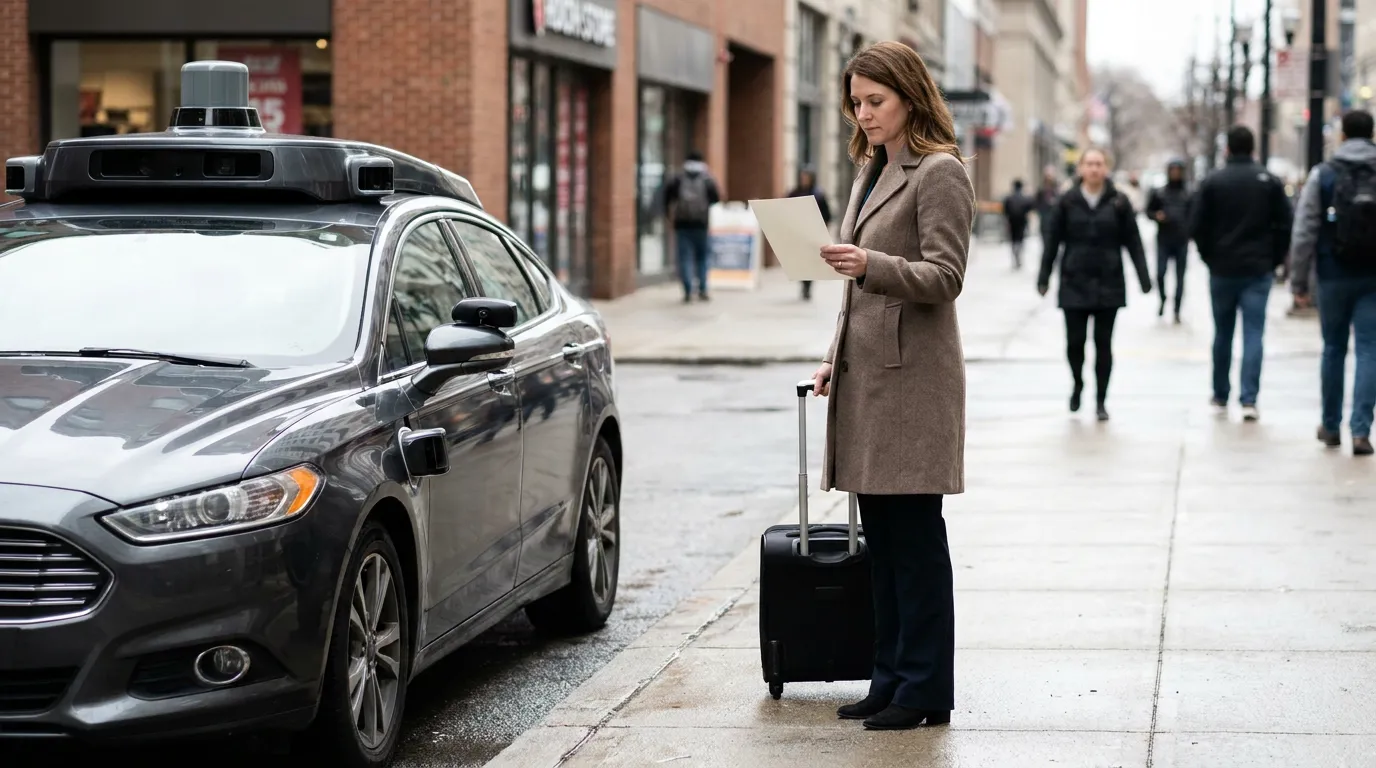
How Wisconsin Defines a Product Warning Defect
Wisconsin law treats a missing or poor warning as a defect in its own right. Under Wis. Stat. § 895.047(1)(a), a product is defective because of poor instructions or warnings only if two conditions are met. First, the manufacturer could have reduced or avoided the foreseeable risks of harm by giving reasonable instructions or warnings. Second, leaving those warnings out made the product not reasonably safe.
What a Warning Failure Might Look Like in a Robotaxi
Warning problems in self-driving vehicles often involve system limits that riders and others on the road cannot see. Warning issues may come up when a company:
- Failed to tell riders how the vehicle behaves in snow, ice, or heavy rain
- Gave no clear alert before the system handed control back to a human or stopped suddenly
- Did not disclose known problems detecting cyclists, pedestrians, or construction zones
- Gave instructions that were confusing, hard to find, or contradicted by marketing
Wisconsin winters make this question especially relevant in Madison. A warning that might be enough in a sunny climate may fall short where sensors must work through slush and low visibility.
💡 Pro Tip: Take screenshots of the app screens, rider terms, and in-vehicle messages you saw before the ride. Companies can change these through updates, so your copies may become key evidence of what warnings existed when you were hurt.
What You Must Prove in a Failure to Warn Claim
Showing that a warning was inadequate is only the first step. Under Wis. Stat. § 895.047(1)(b)-(e), the injured person must also prove each of the following elements by a preponderance of the evidence (meaning more likely than not):
| Element | What It Means in a Self-Driving Car Case |
|---|---|
| Unreasonably dangerous | The warning defect made the vehicle unreasonably dangerous |
| Defect at time of sale | The defect existed when the vehicle left the manufacturer’s control |
| No substantial change | The vehicle reached the user without substantial change |
| Causation | The defect caused your injuries and damages |
Causation is often the hardest element in a self-driving car injury case. The company may argue that a warning would not have changed anything, or that something else caused the crash. To show what the vehicle detected and did, you may need event data recorder output, sensor and camera logs, and software version histories, along with testimony from qualified engineers. To learn more about claims against developers, see our article on whether you can sue self-driving software makers in Wisconsin.
Defenses a Self-Driving Car Company May Raise
Expect the company to fight back. Section 895.047 gives manufacturers several defenses, and knowing them in advance can help you prepare.
Meeting Government Standards
Under Wis. Stat. § 895.047(3)(b), the law presumes a vehicle is not defective if, at the time of sale, it met in material respects the relevant standards, conditions, or specifications adopted or approved by federal or state law or agencies. You can rebut this presumption with other evidence. Meeting a minimum standard does not necessarily settle whether the warnings were reasonable.
Misuse, Obvious Risks, and Intoxication
The statute lists other defenses that can reduce or defeat a claim. Under Wis. Stat. § 895.047(3)(c), the court reduces damages by the percentage of causal responsibility that comes from the injured person’s misuse, alteration, or modification of the product. Under § 895.047(3)(d), the court must dismiss the claim if the harm came from an inherent characteristic of the product that an ordinary person with ordinary knowledge common to the community would recognize. Under § 895.047(3)(a), if the company proves by clear and convincing evidence that the injured person was under the influence of a controlled substance or had an alcohol concentration of 0.08 or more at the time of injury, the law presumes that the intoxication or drug use caused the injury. The injured person can rebut that presumption. Wisconsin’s general comparative fault rules may also reduce your recovery.
Post-Sale Software Updates and Rider Alerts
Self-driving fleets update their software often, and this can affect the evidence in a Waymo accident case. Under Wis. Stat. § 895.047(4), you cannot use evidence of fixes made after the sale, such as a software patch or a new rider alert, to show a manufacturing defect, a design defect, or a warning defect. You may still use that evidence to show that a reasonable alternative design existed when the product was sold. Because this rule is technical, collect update histories early.
Deadlines That Can End a Robotaxi Lawsuit
Wisconsin sets firm deadlines, and missing them can bar your claim completely. Under Wis. Stat. § 893.54(1m)(a), you generally must file a personal injury lawsuit, including one from a motor vehicle accident, within 3 years. Wrongful death claims have a different deadline.
Statute of Repose and Tolling
A separate 15-year limit, called a statute of repose, generally also applies to product claims. Under Wis. Stat. § 895.047(5), a manufacturer generally is not liable if the product was made 15 years or more before the claim arose. There are two exceptions: the manufacturer specifically promised the product would last longer, or the claim involves a latent disease.
Some people may get extra time in limited cases. Wis. Stat. § 893.16 can extend the deadline for people who are minors or mentally ill when the claim arises. The extension is capped and does not apply automatically. Your lawsuit deadline is also separate from the much shorter notice-of-claim deadlines that apply if a government entity is involved. Under Wis. Stat. § 893.80, that notice is generally due within 120 days.
Why Evidence Matters in a Waymo Car Accident Case
In self-driving car product liability cases, the company usually holds the most important evidence. Vehicle logs, camera footage, and software records sit on company servers, not in a police report. Sending a request to preserve evidence quickly may help keep that data from being overwritten or lost.
With driverless testing and rollout under discussion in the Madison area, local residents may face these questions more often. Wisconsin’s product liability statute was written for all kinds of products, and courts have not fully settled how each element applies to AI-driven vehicles. Working with a Waymo car accident lawyer who understands digital evidence can help you present your claim clearly.
💡 Pro Tip: Write down the time, location, vehicle number, and any trip ID from the robotaxi app as soon as you can. These details help pinpoint the exact data logs that should be preserved.
Frequently Asked Questions
1. Can I bring a failure to warn claim if I was a pedestrian, not a passenger?
Possibly. Wisconsin’s statute asks whether reasonable warnings could have reduced foreseeable risks of harm, and harm to pedestrians and cyclists may be among those risks. A warning claim can be harder to prove when the injured person never saw the warnings, so a design or negligence claim may fit better.
2. How long do I have to file a self-driving car injury lawsuit in Wisconsin?
Generally 3 years under Wis. Stat. § 893.54(1m)(a). Limited extensions may apply to minors or people who are mentally ill under Wis. Stat. § 893.16, and shorter notice deadlines apply to claims against government entities.
3. Does a later software update prove the company knew its warnings were inadequate?
Generally not. Wis. Stat. § 895.047(4) bars using fixes made after the sale to prove a warning defect. You may still use this evidence to show that a reasonable alternative design existed at the time of sale.
4. What if the robotaxi met federal safety standards?
Meeting relevant federal or state standards in material respects creates a presumption, which you can rebut, that the vehicle was not defective under Wis. Stat. § 895.047(3)(b). You may be able to challenge that presumption with other evidence, such as data showing the warnings did not address known risks.
5. Will my own conduct reduce my recovery?
It can. Under Wis. Stat. § 895.047(3)(c), the court reduces damages by your share of causal responsibility for misuse, alteration, or modification of the product. Under Wisconsin’s comparative negligence law, your own negligence may also reduce your recovery or bar it entirely.
Protecting Your Rights After a Self-Driving Car Crash
Wisconsin law may give people hurt by self-driving vehicles a way to hold companies accountable for poor warnings, but the law has firm requirements. You generally must prove that reasonable warnings could have reduced the risk, that the defect made the vehicle unreasonably dangerous, that it existed when the vehicle left the manufacturer’s control, and that it caused your injuries. You must also file on time and be ready for defenses. Acting early to preserve digital evidence can make a real difference.
You do not have to sort through these questions on your own. Kent | Pincin represents people hurt by self-driving and robotaxi vehicles, never the companies that build them. Call 608.999.4954 or schedule your consultation to discuss your situation.
Disclaimer: This content is for informational purposes only and is not legal advice. Every case is unique, and results may vary. Consult an attorney about your specific circumstances.