
Can You Sue Tesla If the Driver Was Also Distracted in an Autopilot Crash?
Driver Distraction Does Not Automatically Clear Tesla in an Autopilot Crash
Key Takeaways: In many cases, you can still sue Tesla after an Autopilot crash even if the driver was distracted, because Nebraska law generally lets more than one cause share the blame for a single crash. Under Neb. Rev. Stat. § 60-3303, human drivers must follow the Rules of the Road and take back control when asked, and automated systems must be designed to follow those same rules. Claims against Tesla usually rely on product liability theories such as design defect, failure to warn, or weak driver monitoring. Under Nebraska’s modified comparative fault system, a distracted Tesla driver may recover less or nothing at all on negligence claims. Passengers, pedestrians, and other motorists are generally not at fault for the driver’s distraction. Digital evidence like engagement logs, alerts, and camera footage often shows whether the driver or the technology caused the crash, so save it right away. Most product liability claims in Nebraska must be filed within four years of the injury, and a statute of repose may also apply.
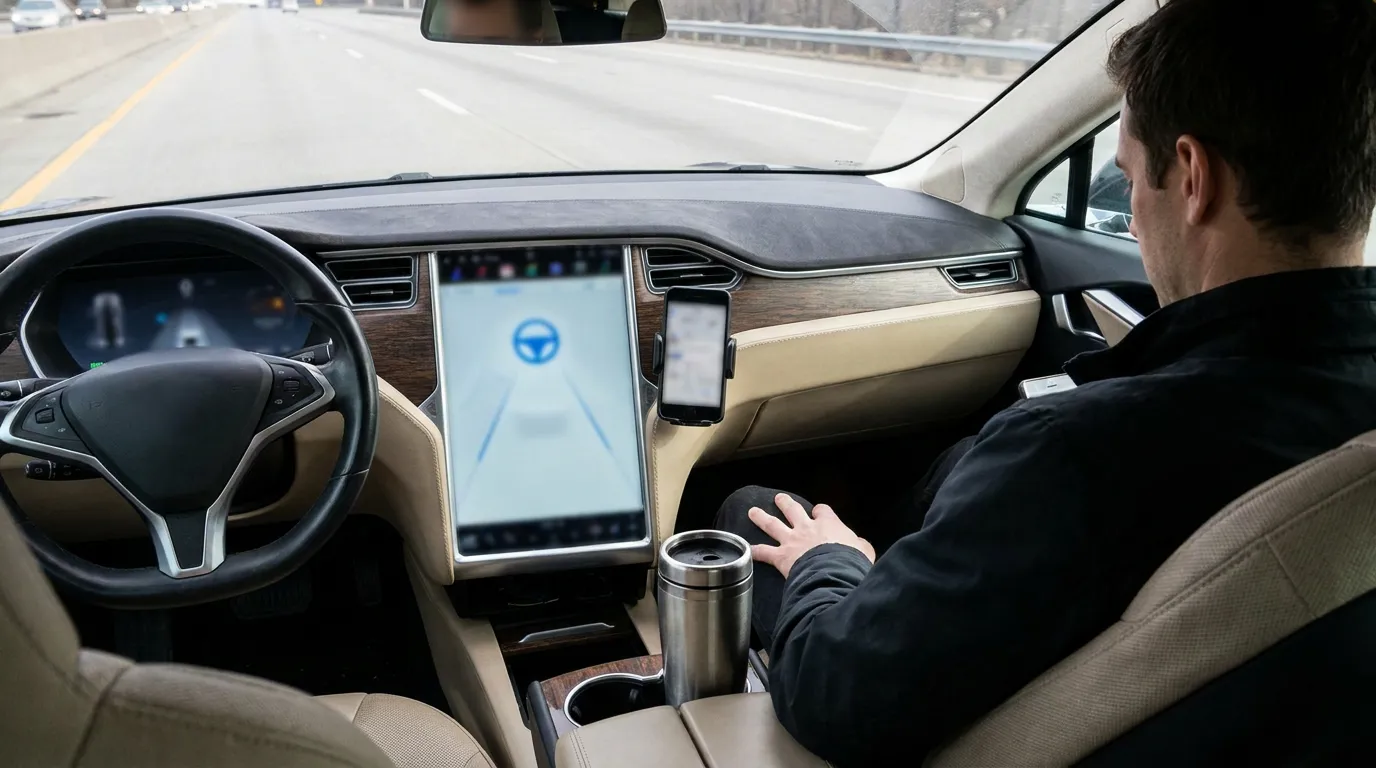
In many cases, you may still be able to sue Tesla after an Autopilot crash even if the driver was also distracted. Nebraska law generally lets courts consider more than one cause of a crash. A distracted driver and a defective driver-assistance system can both contribute. Whether a claim is viable depends on the evidence: how the system was designed, what warnings and safeguards Tesla provided, and what the vehicle’s data shows about the moments before impact. Tesla may point to the driver’s inattention, which may not end the case but can affect causation and how fault is divided.
If you or someone you love was hurt in a crash involving Autopilot or Full Self-Driving, the evidence and the deadlines matter from the first day. Kent | Pincin helps injured people in Nebraska find out who may be responsible and what digital evidence to preserve. Call (402) 243-5535 or contact us now to talk through your situation.
How Nebraska Law Treats Drivers and Automated Systems
Nebraska has specific statutes on vehicles with automated driving systems, found at Neb. Rev. Stat. §§ 60-3301 to 60-3311. Under Neb. Rev. Stat. § 60-3308(1)-(2), only those sections govern these vehicles and systems, and state and local governments cannot add their own operating rules. That statute deals with regulation. It does not expressly address private injury lawsuits, so it is not clearly a bar to a product liability claim.
What the Law Expects From the Human Driver
Nebraska places clear duties on the human driver. Under Nebraska’s driver duty statute, Neb. Rev. Stat. § 60-3303(1), the human driver must follow the Nebraska Rules of the Road, operate the vehicle as the manufacturer requires, and take back manual control when the system asks. A driver who was looking at a phone or ignoring alerts may have broken these duties, and Tesla may use that conduct to argue the driver shares the fault or was the sole cause.
What the Law Expects From the Technology
The same statute also puts a design duty on the technology itself. Neb. Rev. Stat. § 60-3303(2) says an automated driving system, while engaged, must be designed to operate within its operational design domain in compliance with the Nebraska Rules of the Road. Where a system qualifies, this may support an argument that the manufacturer carries its own responsibility, even when the driver was also careless.
Why the Definition of "Automated Driving System" Matters
Not every Tesla feature may fit Nebraska’s legal definition. Neb. Rev. Stat. § 60-3301(1) defines an automated driving system as hardware and software that can perform the entire driving task on a sustained basis. Driver-assistance features that need constant human supervision, as Tesla describes Autopilot and Full Self-Driving (Supervised), likely do not meet that definition. If the feature falls outside it, courts would generally apply ordinary Nebraska product liability and negligence rules instead.
Building a Tesla Autopilot Crash Lawsuit When Fault Is Shared
A Tesla Autopilot crash lawsuit generally rests on traditional product liability theories. The core question is whether the system was defective and whether that defect was a proximate cause of the crash. Driver distraction is part of the story, but often not the only part.
Common Autopilot product liability theories include:
- Design defect: The system may have failed to detect a hazard, misread lane markings, or allowed engagement in conditions it could not handle.
- Failure to warn: Tesla’s instructions, alerts, or marketing may not have clearly explained the system’s limits.
- Inadequate driver monitoring: The system may have let a driver stay inattentive too long without stronger warnings.
- Manufacturing or software defect: A specific vehicle or software update may have performed differently than intended.
The "operational design domain" often becomes central. Neb. Rev. Stat. § 60-3301(9) defines it as the specific conditions a system is designed to operate in, including road types, speed range, and weather. If the driver used a system on the wrong road type or in bad weather, both the driver’s conduct and Tesla’s safeguards can become issues. A plaintiff may argue that Tesla should have blocked engagement outside those conditions instead of just warning against it.
💡 Pro Tip: Save screenshots of any in-car alerts, app notifications, or software update notices you can access. These records can help show what the system told the driver and when.
How Comparative Fault Can Affect Your Recovery
Nebraska generally uses a modified comparative fault system, under Neb. Rev. Stat. § 25-21,185.09. An injured person’s own negligence reduces their recovery in proportion to their share of fault. If the claimant’s negligence equals or exceeds the total negligence of all defendants, the claimant recovers nothing. In strict product liability claims, Nebraska also recognizes defenses such as assumption of risk and misuse of the product (Neb. Rev. Stat. § 25-21,185.12 and related law).
| Your Role in the Crash | How Driver Distraction May Factor In |
|---|---|
| Passenger, pedestrian, or cyclist | The driver’s distraction is generally not your fault; Tesla and the driver may each be assigned a share of responsibility |
| Occupant of another vehicle | You may have claims against both the Tesla driver and the manufacturer |
| The distracted Tesla driver | Your own inattention may reduce, or in some cases bar, your recovery |
For third parties, how fault is split between defendants can still matter. Under Neb. Rev. Stat. § 25-21,185.10, when there are multiple defendants, liability for economic damages is generally joint and several, while liability for noneconomic damages is generally several and tied to each defendant’s share. A case involving a distracted Tesla driver and an injured pedestrian could still include a strong claim against the manufacturer.
What Federal Investigations Reveal About Tesla’s Systems
Federal regulators have closely examined Tesla’s driver-assistance technology. In October 2024, the National Highway Traffic Safety Administration opened an investigation into Tesla’s Full Self-Driving software after crash reports in low-visibility conditions, including one that killed a pedestrian.
NHTSA has also looked at Autopilot crashes involving driver engagement and distraction. Its Autopilot investigation led to a December 2023 recall addressing driver-engagement controls. That attention may support an argument that driver monitoring is a design issue manufacturers are responsible for, even when drivers are also at fault.
Agency findings are not the same as a court ruling. An NHTSA investigation is an administrative process, separate from a civil lawsuit. Still, findings about software defects or weak driver monitoring may become useful evidence in a product liability case. You can read more in our article on suing self-driving software makers.
Preserving the Digital Evidence That Proves Causation
Digital evidence often shows whether the technology or the driver caused the crash. Tesla vehicles record large amounts of data, including event data recorder information, camera footage, steering and braking inputs, system engagement status, and alert histories.
Evidence Worth Protecting Early
Some of this information can be overwritten or become harder to access over time. Key records may include crash data, Autopilot or FSD engagement logs, hands-on-wheel alerts, software update history, and any dashcam or Sentry Mode footage. Witness statements, police reports, and photos of road and weather conditions also help show whether the system was operating within its design limits.
Reading this data usually takes qualified engineering experts. Logs can show whether the driver ignored warnings, but they can also show whether the system failed to warn, or warned too late. A Tesla Autopilot crash lawsuit lawyer can send demands to preserve key evidence before it disappears.
💡 Pro Tip: Avoid repairing, selling, or salvaging a crashed Tesla until you have spoken with an attorney. The vehicle itself may hold critical evidence.
Nebraska Deadlines You Cannot Afford to Miss
Nebraska generally requires you to file product liability actions within four years of the injury, death, or damage. Under Nebraska’s product liability deadline, Neb. Rev. Stat. § 25-224(1), the clock typically starts on the date of the harm. Exceptions are limited. Negligence claims against the driver may have a different deadline.
There may also be an outside time limit called a statute of repose. Under Neb. Rev. Stat. § 25-224(2)(a)(ii), products made outside Nebraska, which would usually include Tesla vehicles, follow the repose period of the state or country where they were made, but never less than ten years. If that place has no repose statute, only the four-year deadline in subsection (1) applies.
These limits do not apply when a defendant seeks indemnity or contribution. Under Neb. Rev. Stat. § 25-224(3), Tesla could pursue another responsible party, such as a negligent driver, without being blocked by these limits. That rule affects Tesla’s options, not yours. Your own deadline still applies.
Frequently Asked Questions
1. Can I sue Tesla if the Tesla driver admits they were texting?
Possibly. A driver’s admission may support a claim against the driver, but it does not automatically rule out a defect claim against Tesla. If the system’s design or warnings also contributed, both may share responsibility.
2. Is Tesla’s Autopilot considered an "automated driving system" in Nebraska?
Likely not. Neb. Rev. Stat. § 60-3301(1) covers systems that can perform the entire driving task on a sustained basis. Features that need constant supervision, like Autopilot, likely fall outside that definition.
3. What if I was the distracted driver?
You may still have a claim, but your own fault may reduce your recovery under Neb. Rev. Stat. § 25-21,185.09. If your negligence equals or exceeds the defendants’ combined negligence, you recover nothing. Tesla may also raise defenses such as misuse or assumption of risk.
4. Does an NHTSA investigation prove Tesla was at fault?
No. An NHTSA investigation is a regulatory process. Its findings may support a civil claim, but a court or jury decides liability based on the evidence in your case.
5. How long do I have to file a claim in Nebraska?
Generally four years from the date of injury, death, or damage under Neb. Rev. Stat. § 25-224(1), and a statute of repose may also apply. Act early.
Holding Manufacturers Accountable When Fault Is Shared
Driver distraction and a product defect can both contribute to the same Autopilot crash. Nebraska law places duties on human drivers and design duties on automated driving systems under Neb. Rev. Stat. § 60-3303, and general product liability law applies to driver-assistance features. Whether you can sue Tesla depends on the vehicle’s data, the system’s limits, Tesla’s warnings, and your role in the crash. Strict deadlines under Neb. Rev. Stat. § 25-224 make early evidence preservation essential.
You do not have to sort through the technical evidence and fault questions on your own. Kent | Pincin represents injured people in product liability claims involving semi-autonomous vehicles. Call (402) 243-5535 or schedule your consultation to discuss your Tesla Autopilot crash lawsuit options.
Disclaimer: This content is for informational purposes only and is not legal advice. Every case is unique, and results may vary. Consult an attorney about your specific circumstances.