
How Element 4 of CACI 2620 Shapes a Redondo Beach Retaliation Case
Why the Causation Question Decides Most Medical Leave Retaliation Claims
Key Takeaways: Most California Family Rights Act retaliation cases hinge on Element 4 of CACI 2620, which asks whether protected leave was a substantial motivating reason for the adverse action. An employee need not prove leave was the sole cause, but a trivial influence is insufficient. Because employers rarely admit their motive, causation is built circumstantially through timing, sudden negative reviews, frustrated communications, shifting explanations, and differential treatment. Employers defend by offering an independent business reason or arguing the decision-maker lacked knowledge of the leave request. Because strict deadlines apply, prompt review of the timeline is essential to protect a claim.
When a jury evaluates a California Family Rights Act retaliation claim, the case rarely turns on whether the employee took leave or was fired. Those facts are usually documented. The fight is over Element 4: whether the protected leave was a substantial motivating reason for the adverse action. That single causation element is where most cases are won or lost.
If you were pushed out after requesting or taking protected leave, the team at Kent | Pincin can review the timeline and documentation with you. Call (310) 424-4991 or contact us now to discuss your situation.
What CACI 2620 Requires a Plaintiff to Prove
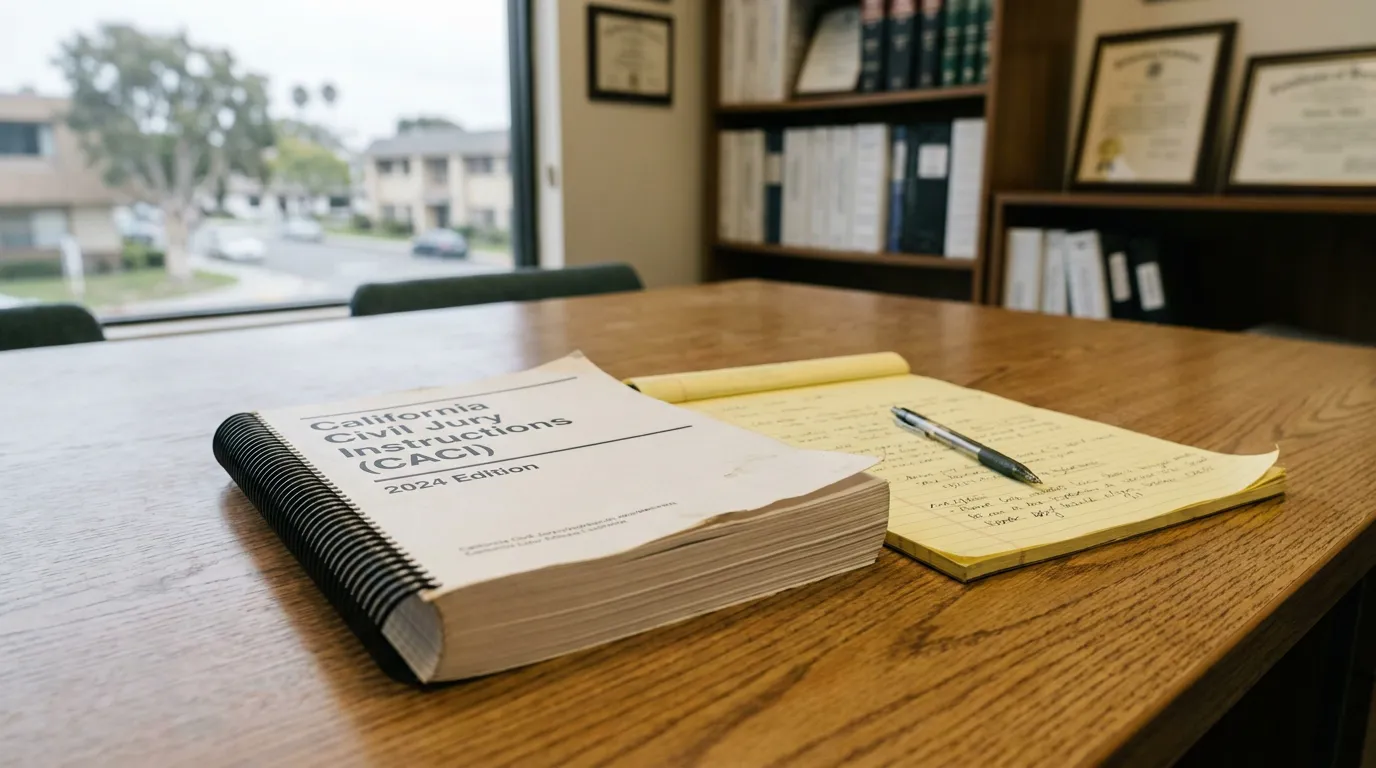
CACI 2620 is the California civil jury instruction used for retaliation claims brought under the California Family Rights Act. The instruction sets out six elements that the plaintiff must prove in their entirety, including eligibility, protected activity, adverse action, causation as a substantial motivating reason, harm, and that the retaliatory conduct was a substantial factor in causing that harm, with causation appearing as Element 4.
Generally, the CACI 2620 elements require an employee to show:
- The employer was covered by the CFRA and the employee was eligible for protected leave
- The employee took or requested qualifying family care or medical leave
- The employer subjected the employee to an adverse employment action
- The employee’s exercise of the right to CFRA leave was a substantial motivating reason for that adverse action
- The employee was harmed as a result
Eligibility is contested in some cases. CFRA leave generally requires more than 12 months of service and at least 1,250 hours worked in the prior 12 months, so long-tenured full-time employees usually qualify while part-time or newly hired workers may not.
The statutory foundation sits in the Government Code. The California Family Rights Act is codified principally at Cal. Gov. Code § 12945.2, with a parallel provision for state civil service employees at Cal. Gov. Code § 19702.3. Section 12945.2 limits protected leave to 12 workweeks in a 12-month period and provides that CFRA leave runs concurrently with federal Family and Medical Leave Act leave where the employee is eligible under both laws.
The Prohibited Conduct Is Defined by Statute
California law expressly forbids an employer from refusing to hire, discharging, suspending, or otherwise discriminating against a worker because that person exercised the right to family care and medical leave. That statutory language mirrors the "protected activity" and "adverse action" concepts that CACI 2620 asks a jury to evaluate, which is why the causation element carries substantial weight.
How Element 4 of CFRA Retaliation CACI 2620 Actually Works
Element 4 asks whether the protected leave was a substantial motivating reason for the employer’s decision, not the only reason. This distinction is critical. An employer may have had legitimate performance concerns and still be liable if leave played a substantial role. Conversely, showing leave was merely a passing thought is generally insufficient.
The "substantial motivating reason" standard sets a middle course. Drawing on the California Supreme Court’s analysis in Harris v. City of Santa Monica, it requires a reason that actually contributed to the decision and was more than trivial. Juries weigh the connection between the protected activity and the decision, the decision-maker’s knowledge, and whether the stated reason holds up under scrutiny. Even where mixed motive is proven, remedies can be limited if the employer shows it would have made the same decision for lawful reasons alone.
Evidence That Commonly Supports the Causation Element
In most cases, causation is proven circumstantially rather than through direct admission. Few employers state in writing that leave motivated a termination, so analysis depends on patterns. Timing, shifting explanations, and internal communications carry substantial weight.
Common categories of proof include close temporal proximity between the leave request and adverse action, sudden negative performance reviews after years of positive ones, emails or text messages reflecting frustration about the absence, inconsistent explanations, and differential treatment compared to employees who did not take leave. Understanding what evidence proves retaliation can help workers preserve materials before they disappear.
💡 Pro Tip: Forward key emails and save screenshots of relevant text messages to a personal device before any employment action becomes final. Access to company systems is typically cut off immediately upon termination.
Where Employers Focus Their Defense
Employers generally attack Element 4 by offering an alternative explanation they characterize as the true reason. Reorganizations, budget reductions, documented misconduct, and pre-existing performance plans are common themes. Once a lawful reason is articulated, the employee retains the ultimate burden of persuading the jury that leave was nonetheless a substantial motivating reason.
A second common defense targets the decision-maker’s knowledge. If the person who made the termination decision genuinely did not know about the leave request, causation becomes considerably harder to establish. Plaintiffs respond by tracing how information moved through human resources and management, though success depends heavily on the documentary record.
| Element Focus | What the Employee Shows | What the Employer Typically Argues |
|---|---|---|
| Protected activity | Leave was requested or taken | Leave did not qualify under the CFRA |
| Adverse action | Termination, demotion, or suspension | Action was routine or not materially adverse |
| Element 4 causation | Leave was a substantial motivating reason | An independent business reason drove the decision |
| Harm | Lost wages, benefits, and related damages | Damages are limited or unrelated |
How CACI 2620 Compares to FEHA Retaliation Instructions
CFRA retaliation claims often travel alongside FEHA retaliation and disability discrimination claims. The Fair Employment and Housing Act contains a parallel anti-retaliation structure under Cal. Gov. Code § 12940(h), which makes it unlawful to discharge or otherwise discriminate against a person because they opposed practices forbidden under FEHA or filed a complaint, testified, or assisted in a FEHA proceeding.
The FEHA retaliation instruction follows a similar analytical path. CACI No. 2505 requires proof of protected activity, adverse employment action, that the protected activity was a substantial motivating reason, and resulting harm. The overlap in the causation standard means evidence developed for one claim frequently supports the other.
Accommodation Requests Are Separately Protected
A request for disability accommodation is independently protected, whether or not the employer granted it. Under Cal. Gov. Code § 12940(m)(2), it is unlawful to retaliate against a person for requesting accommodation. This matters because employees facing serious health conditions often request both leave and accommodations, creating multiple categories of protected activity for a jury to consider.
Employer Obligations That Strengthen a Retaliation Record
California regulations impose affirmative duties on employers that can become meaningful evidence in a retaliation case. Under Cal. Code Regs. tit. 2, § 11023(a), employers must take reasonable steps to prevent and promptly correct discriminatory and harassing conduct; under § 11023(b), employers must maintain a written harassment, discrimination, and retaliation prevention policy. Failure to follow these obligations does not establish retaliation itself, but can support an inference that the employer’s stated process was not genuinely followed.
Coverage thresholds also shape which claims are viable. Since 2021, the CFRA applies to employers with five or more employees, so employer coverage is rarely contested in cases against major corporations. A Redondo Beach employment lawyer can assess how these thresholds apply to a particular employment relationship.
Administrative Steps and Timing Considerations
Retaliation claims under FEHA generally begin with an administrative filing before the California Civil Rights Department. Because the CFRA is part of FEHA, CFRA retaliation claims are ordinarily subject to the same exhaustion requirement: a CRD complaint and right-to-sue notice before filing suit.
Deadlines in this area are strict. A CRD complaint must be filed within three years of the alleged unlawful conduct, and a civil action must typically be filed within one year after a right-to-sue notice issues. Courts generally interpret tolling exceptions narrowly, and no worker should assume an extension will apply. Prompt review of a specific timeline is the only reliable way to protect a claim.
Frequently Asked Questions
1. Does close timing alone prove Element 4?
Timing is powerful but rarely sufficient on its own. Courts may treat close temporal proximity as circumstantial evidence supporting causation, though employers frequently rebut it with documentation predating the leave request.
2. What if my employer had a legitimate reason for firing me?
An employer can have a legitimate concern and still face liability. The standard is whether protected leave was a substantial motivating reason, not the exclusive reason. Mixed-motive cases are typically resolved by the jury, though available remedies may be reduced if the employer proves it would have taken the same action for lawful reasons alone.
3. Do CFRA and FMLA leave run at the same time?
Often, but not always. Cal. Gov. Code § 12945.2 provides for up to 12 workweeks in a 12-month period, and that leave generally runs concurrently with FMLA leave taken for the same qualifying reason by an employee eligible under both laws. Where only one statute covers the reason or family member, the leaves can run separately.
4. Can I bring a retaliation claim if my accommodation request was denied?
Yes. Under Cal. Gov. Code § 12940(m)(2), retaliation for requesting accommodation is unlawful regardless of whether the request was granted.
5. What records should I gather before speaking with counsel?
Performance reviews, the leave request, medical certifications submitted to the employer, relevant emails and text messages, the termination notice, and any written company policy on retaliation prevention are useful starting points.
Bringing the Causation Analysis Into Focus
Element 4 is the analytical center of a CFRA retaliation claim. The eligibility, leave, and adverse action elements are often established with routine documentation, while the substantial motivating reason question demands a carefully constructed factual record drawn from timing, communications, and the consistency of the employer’s stated explanation.
If your employment ended after you requested or took protected medical leave, Kent | Pincin is available to evaluate the documentation and timeline behind your claim. Call (310) 424-4991 or schedule a consultation to take the next step.