
How Long Do Madison Victims Have to File a Self-Driving Car Claim?
Understanding the Clock on Autonomous Vehicle Claims in Madison
Key Takeaways: Madison victims of a self-driving car crash generally have three years from the date of injury to file a personal injury lawsuit under Wisconsin’s statute of limitations, Wis. Stat. § 893.54. However, the technical complexity means the practical timeline is often much shorter, as digital evidence like Event Data Recorder data and sensor logs can be lost within weeks. Identifying the right defendant—manufacturer, software developer, fleet operator, or human safety operator—shapes which legal theories and deadlines apply. Wisconsin’s modified comparative negligence rule under Wis. Stat. § 895.045 can reduce or eliminate recovery based on your fault share, and product-liability provisions limit claims against manufacturers when your responsibility exceeds the defect’s. Acting well before the three-year deadline is essential to preserving evidence and protecting your recovery rights.
If a self-driving or semi-autonomous vehicle injured you in Madison, you generally have three years from the date of the crash to file a personal injury lawsuit. Wisconsin’s general personal injury statute of limitations under Wis. Stat. § 893.54 sets that three-year window for collisions involving autonomous vehicles. However, the technology behind these crashes creates unique challenges that make waiting until the deadline a serious mistake. Between preserving digital evidence, identifying the right defendant, and navigating product-defect rules, the practical timeline is often much shorter.
If you or a loved one was hurt by a self-driving vehicle, the team at Kent | Pincin is ready to help. Call us at 608.999.4954 or reach out through our online contact form to discuss your situation before critical deadlines pass.
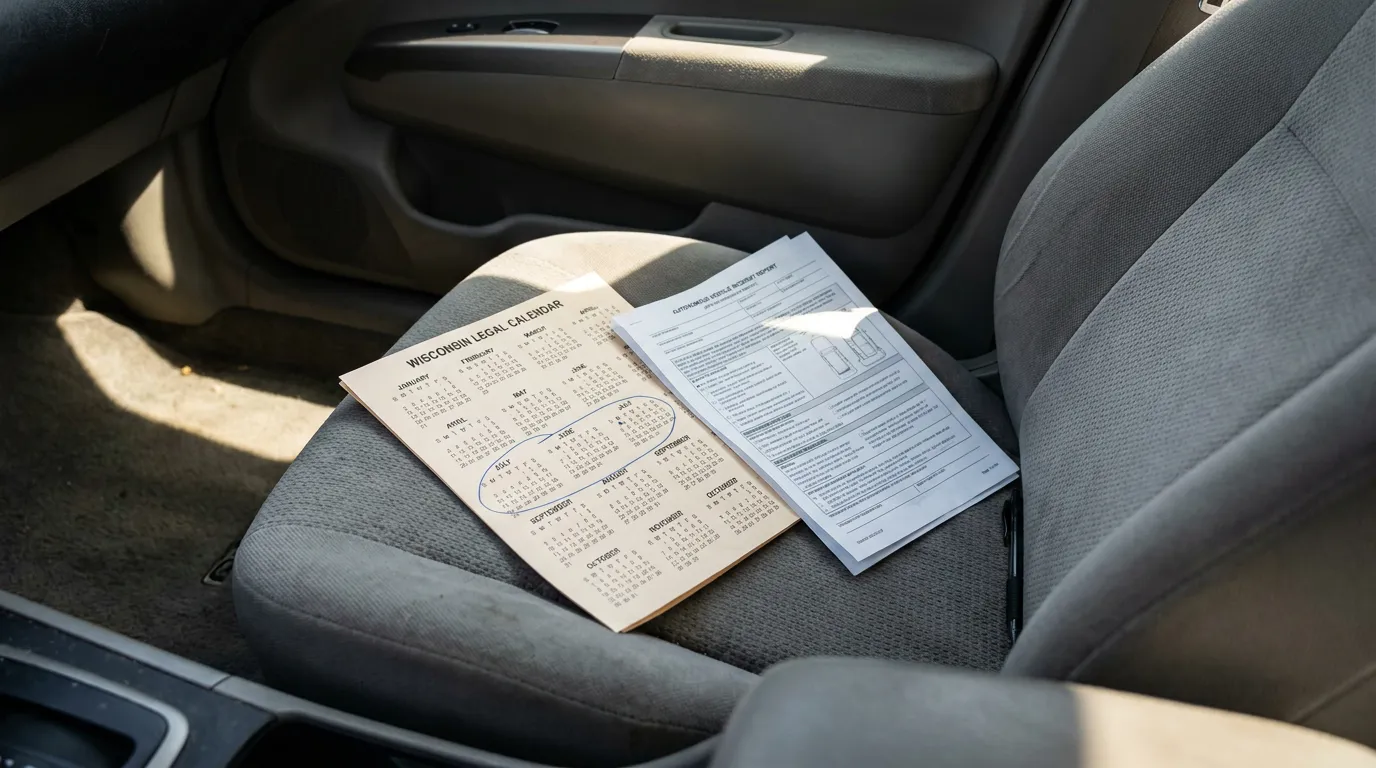
The Three-Year Window for Wisconsin Car Accident Claims
In Madison and across Wisconsin, the deadline to file most car accident lawsuits is three years from the date of injury. According to Wisconsin’s car accident filing rules, the statute of limitations for personal injury cases tied to vehicle crashes is generally three years. Missing that deadline typically bars recovery entirely, as courts may refuse to hear your case regardless of evidence strength.
This rule is subject to narrow exceptions. Certain circumstances may pause, or “toll,” the clock, but tolling does not apply automatically. Treat the three-year figure as a firm outer limit rather than a comfortable buffer.
💡 Pro Tip: Mark your calendar for at least six months before the three-year deadline. Complex autonomous vehicle cases frequently require technical investigation that can take many months to complete.
Why Autonomous Vehicle Liability Changes the Timeline
The core difficulty in autonomous vehicle liability is determining who, or what, actually caused the crash. When a car partially or fully drives itself, the traditional assumption of human driver fault no longer holds. As one law review analysis frames it, when a car drives itself, difficult questions arise about whether the manufacturer or the person directing it should answer for a collision. This threshold question directly affects who you must sue and under what legal theory, shaping which deadlines apply.
Who Might Be Responsible for Your Injuries?
Several different parties may share responsibility when an autonomous vehicle causes harm. Depending on the facts of your Madison car accident, a claim might target:
- The vehicle manufacturer that designed or built a defective vehicle or component
- The software developer responsible for the autonomous driving system
- The fleet operator or rideshare company managing the vehicle
- A human driver or safety operator who failed to intervene when required
Identifying the correct party early helps preserve your ability to file on time and strengthens your autonomous vehicle accident claim. For a deeper look at how fault is assigned in these complex cases, our discussion of a self-driving car lawsuit in Madison walks through the competing theories.
Comparative Negligence and How Much You Can Recover
Wisconsin applies a modified comparative negligence rule that can reduce or eliminate your recovery based on your own share of fault. Under Wis. Stat. § 895.045(1), contributory negligence does not bar recovery as long as your negligence was not greater than the negligence of the party you are suing, but damages are reduced in proportion to your fault. This means injured Madison victims can recover even if partially responsible, provided their fault does not exceed the defendant’s.
Your negligence is compared separately against each individual defendant rather than against all defendants combined. When a driver, manufacturer, and software maker may each share blame, this separate-comparison approach determines whether you recover from a given party.
The statute also governs how much each defendant must pay. Under Wis. Stat. § 895.045(1), a person found less than 51 percent causally negligent is liable only for their percentage share, while a person found 51 percent or more at fault may be jointly and severally liable for the full award.
Product Liability Rules for Defective Self-Driving Vehicles
When a vehicle defect causes a crash, Wisconsin’s strict product-liability framework adds its own rules and limitations. Under Wis. Stat. § 895.045(3)(a), in a strict-liability defective-product action the fact finder determines whether the injured party has the right to recover, allocating causal responsibility among the injured person, the product defect, and any other party.
There is a critical carve-out to remember. Under Wis. Stat. § 895.045(3)(b), if your percentage of total causal responsibility is greater than the percentage attributable to the product’s defect, you may not recover from the manufacturer, distributor, or seller based on that defect. This limitation underscores why careful fault analysis matters from the outset of any defective vehicle lawsuit.
💡 Pro Tip: A defect claim and an ordinary negligence claim can arise from the same crash but follow different proof requirements. A Madison WI product liability attorney can help evaluate which theory, or combination of theories, fits your facts.
Preserving Digital Evidence Before It Disappears
The single most time-sensitive part of an autonomous vehicle claim is often preserving the technical data that proves what went wrong. Self-driving vehicles generate sensor logs, camera footage, software update histories, and other digital records that establish causation. One legal commentator has argued that all autonomous vehicles should carry an Event Data Recorder, or “EDR,” to monitor and record vehicle functioning data. That “black box” evidence can be decisive for building a timely claim.
Digital evidence can be overwritten, lost, or withheld if no one acts quickly to secure it. Even though the filing deadline may be years away, the window to preserve key data can close within weeks. Sending timely preservation notices and involving qualified technical witnesses early protects your case.
💡 Pro Tip: Do not assume the vehicle’s manufacturer or operator will voluntarily hold onto crash data. A prompt, written preservation demand is often necessary to prevent routine deletion.
The Role of Event Data Recorders in Your Claim
Event Data Recorders provide objective evidence of how an autonomous system behaved in the moments before a crash. This data may show whether the vehicle detected a hazard, whether it attempted to brake, and whether a human operator had any opportunity to intervene. When paired with appropriate expert testimony, that information helps establish both causation and corporate responsibility in your self-driving vehicle injury case.
Because Wisconsin uses fault and negligence to determine liability, this technical record can directly influence how responsibility is allocated among manufacturers, software developers, and other parties.
Exceptions, Related Deadlines, and Common Pitfalls
The general three-year deadline is not the only clock that may affect your case. Wisconsin tort law contains several strict and sometimes surprisingly short filing periods. For example, the Legislature has imposed a one-year statute of limitations on certain tort contribution claims under Wis. Stat. § 893.92. While that deadline applies to contribution among parties rather than your primary injury claim, it illustrates how varied these timelines can be.
Government administrative claim deadlines, which can apply if a public entity is involved, are separate and often shorter. These are distinct processes, and one does not automatically extend the other.
| Deadline | Governing Authority | General Timeframe |
|---|---|---|
| Personal injury lawsuit | Wis. Stat. § 893.54 | 3 years |
| Tort contribution claim | Wis. Stat. § 893.92 | 1 year |
| Product defect (strict liability) allocation | Wis. Stat. § 895.045(3) | Applies within the injury claim |
Keep in mind that outcomes depend heavily on specific facts, and this information is general rather than individualized legal advice.
Frequently Asked Questions
1. How long do I really have to file a self-driving car claim in Madison?
Generally, you have three years from the date of the crash under Wis. Stat. § 893.54. However, exceptions exist and courts interpret them narrowly. Because evidence can disappear long before the deadline, acting well before the three-year mark is often essential.
2. Can I still recover if I was partly at fault?
Possibly, under Wisconsin’s modified comparative negligence rule. Wis. Stat. § 895.045(1) allows recovery as long as your negligence is not greater than the defendant’s, though your damages are reduced by your share of fault. Recovery from a specific party depends on how fault is compared separately against that party.
3. What if the vehicle’s defect was only partly responsible?
Wisconsin law limits product-defect recovery in that situation. Under Wis. Stat. § 895.045(3)(b), if your causal responsibility exceeds the responsibility attributable to the defect, you may not recover from the manufacturer based on that defect. This makes early fault analysis important.
4. Why is preserving data so urgent if I have three years to file?
Because technical evidence can be lost or overwritten within weeks. Event Data Recorders, sensor logs, and software histories are often the strongest proof of causation. Securing that data quickly protects your ability to prove your case later.
5. Does a government administrative deadline change my three-year window?
Not automatically. Administrative claim deadlines are separate from civil statutes of limitations and may apply if a public entity is involved. One process does not extend the other, so both should be tracked independently.
Protecting Your Right to Recover After a Self-Driving Crash
Time is one of the most valuable assets an injured Madison victim has, and autonomous vehicle liability cases demand early action. The three-year statute of limitations sets the outer boundary, but the practical work of identifying defendants, preserving black-box data, and applying Wisconsin’s comparative negligence and product-liability rules under Wis. Stat. § 895.045 often needs to begin much sooner. Missing a deadline or losing key evidence can permanently affect your ability to recover.
If a self-driving or semi-autonomous vehicle caused your injuries, do not wait to protect your rights. Contact Kent | Pincin online through our secure contact page or call 608.999.4954 today to discuss how Wisconsin’s filing deadlines and product-liability rules may apply to your case.