
Speeding 20 MPH Over Adds 6 Demerit Points to a Wisconsin License
Understanding the Real Cost of a 6-Point Speeding Ticket in Madison
Key Takeaways: Driving 20 mph over the limit in Wisconsin adds six demerit points to your license, exactly half the 12-point threshold that triggers suspension within a rolling one-year period from each violation date. While points stop counting toward suspension after twelve months, the conviction remains visible on your record for years and may still affect insurers and courts. Two 6-point tickets within a year can trigger suspension, and probationary drivers face doubled points after their first ticket. Suspension requires a $60 reinstatement fee. When speeding causes a crash, the citation can serve as compelling evidence of negligence in a personal injury case.
Getting caught driving 20 mph over the limit does more than dent your wallet. In Wisconsin, that citation typically adds six demerit points to your record, half the threshold that can cost you your license. If you’ve been searching for how long do points stay on your license in Wisconsin, the short answer is that demerit points count within a rolling one-year period measured from your violation date, though the conviction remains visible for years afterward. Understanding this distinction matters for every Madison driver, especially when a crash and injuries are involved.
At Kent | Pincin, we help injured people across Wisconsin understand how traffic violations, liability, and compensation intersect. If you have questions after a speeding-related collision, contact our team today, call us at 608.999.4954, or learn more at Kent | Pincin.
Where Wisconsin Speeding Law Actually Comes From
Wisconsin speeding offenses trace back to specific statutory language. Speeding violations are codified under Wis. Stat. § 346.57, which addresses several distinct behaviors: exceeding posted limits under § 346.57(5), exceeding fixed limits under § 346.57(4)(e), and driving too fast for conditions under § 346.57(3). Each provision serves as the legal basis for speed-related demerit points assessed against a Wisconsin license.
Severity escalates depending on circumstances. While ordinary speeding in Wisconsin is a non-criminal civil forfeiture, related or aggravated conduct, such as reckless driving under § 346.62 or speeding that causes injury, can carry far more serious, sometimes criminal, penalties. For anyone reviewing the exact elements of these charges, the official compilation of Wisconsin speeding statutes published by the state law library offers a high-trust reference.
💡 Pro Tip: The number of points assigned to your ticket generally appears in the upper right-hand corner of the citation. Checking that figure early helps you understand how close you may be to a suspension.
How the Wisconsin Point System Works
The Wisconsin point system tracks patterns of unsafe driving over time. When a driver is found guilty of a traffic violation, demerit points are added to their record. A 20 mph over violation commonly carries six points, half the amount needed to trigger a license suspension.
The critical threshold is 12 points. If you accumulate 12 or more demerit points within a one-year period, your license will generally be suspended. Crucially, that one-year window is counted by violation date, not conviction date. Court scheduling delays don’t reset the clock, and multiple citations can stack quickly.
Point accumulation carries administrative consequences separate from any civil injury claim. A demerit-point suspension lasts a minimum of two months, with length increasing based on total points accumulated. After suspension ends, drivers typically pay a $60 reinstatement fee and may need to provide proof of insurance before license restoration. This administrative process through the Wisconsin Department of Motor Vehicles is separate from any personal injury lawsuit.
Why Two 6-Point Tickets Can End Your Driving Privileges
Two separate 6-point speeding tickets within twelve months can trigger suspension. Because six points is exactly half the 12-point limit, a driver who speeds 20 mph over twice in a short window may face a suspended license. For a deeper look at what happens at this threshold, our article on how points on license Wisconsin can lead to suspension after a Madison accident explains the mechanics in detail.
How Long Do Points Stay on Your License in Wisconsin?
Answering how long do points stay on your license in Wisconsin requires separating two ideas. The first is the counting window used for suspension; the second is the visibility of the violation on your record. For suspension purposes, points are tallied within a rolling one-year period measured from each violation date. Once a violation falls outside that twelve-month window, it no longer counts toward the 12-point suspension threshold.
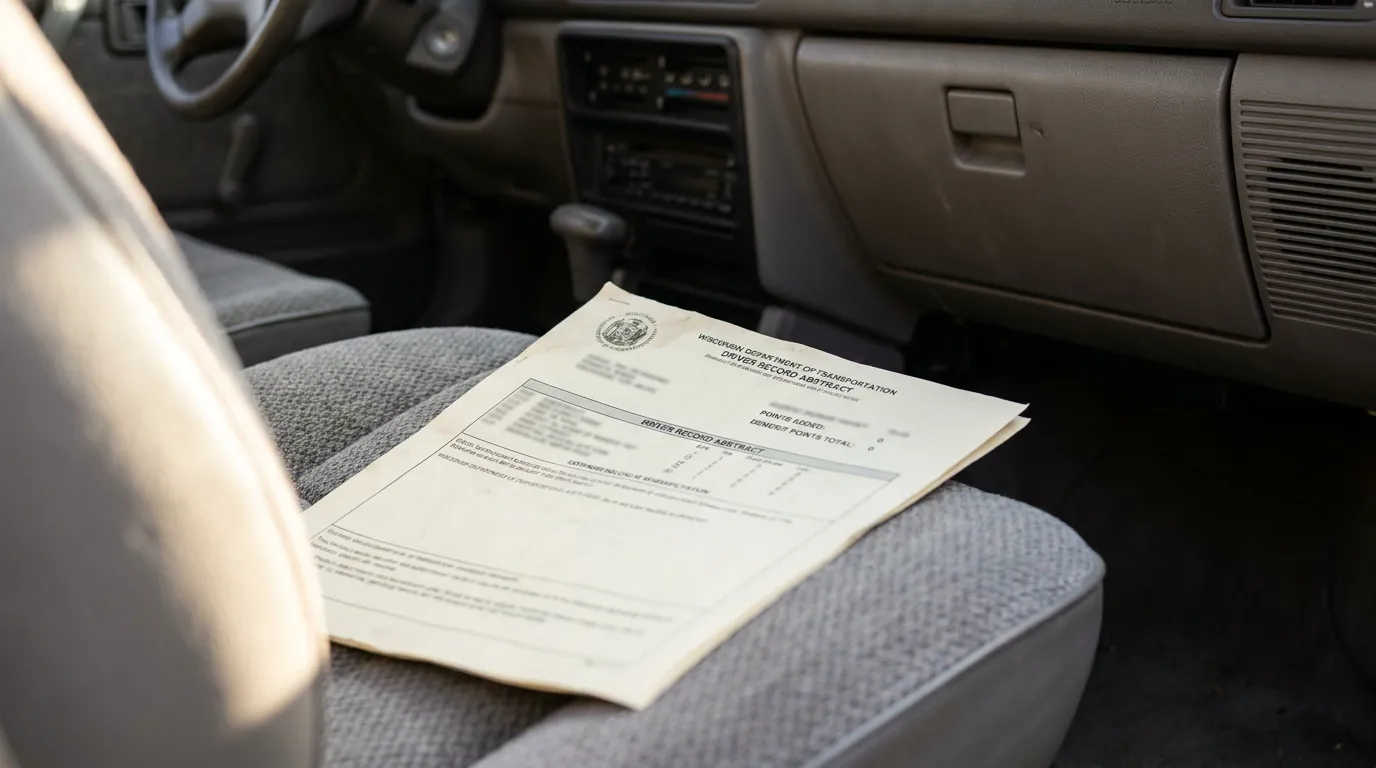
The conviction itself doesn’t vanish when points stop counting. A speeding conviction typically remains on your driving record for about five years and may still be visible to insurers and courts even after it stops contributing to potential suspension. Because point rules can change, drivers should verify current figures against the Wisconsin DOT point schedule under Trans 101.
💡 Pro Tip: If you are unsure whether an old ticket still counts against you, request a copy of your official driving record from the Wisconsin DMV rather than relying on memory or third-party estimates.
Why Madison Drivers Face Higher Enforcement Odds
Wisconsin drivers encounter speed enforcement at some of the highest rates in the country. Wisconsin ranks second only to North Dakota for the share of drivers carrying a speeding ticket, with roughly 8% of Wisconsin drivers having one on record. According to a University of Wisconsin transportation professor, the state conducts targeted enforcement activities, and aircraft are sometimes used to spot speeders from the air.
Many drivers underestimate the long-term cost because fines seem modest. Fines for speeding in Wisconsin usually range from about $200 to $800, plus points on your license. Some drivers view a ticket as worth the risk because the fine seems small compared to time saved. That reasoning overlooks the demerit points, which create longer-term consequences than the monetary penalty alone. You can read more about Wisconsin speeding ticket rates in recent reporting on statewide enforcement trends.
Here are common consequences a 6-point speeding conviction may trigger:
- Six demerit points added to your Wisconsin driving record
- A monetary fine that generally falls within the state’s typical range
- Increased proximity to the 12-point suspension threshold
- Potential insurance premium increases after the conviction posts
- A $60 reinstatement fee if a suspension ultimately occurs
Special Rules for Probationary and Newer Drivers
Probationary license holders face harsher point consequences than fully licensed drivers. Under Wisconsin’s approach, there are generally no extra points on a probationary driver’s first ticket. However, points may be doubled on each ticket after the first one. For a newer driver facing a 6-point speeding charge as a second offense, that doubling can be especially damaging: a doubled 6-point violation becomes 12 points, which by itself can trigger an immediate suspension.
These rules make early, careful decisions particularly important for younger drivers. A probationary driver who receives a second speeding ticket could see points climb faster than expected, increasing suspension risk.
💡 Pro Tip: If you hold a probationary license, keep a personal log of your citation dates. Knowing exactly when the one-year window opened and closed helps you gauge your real exposure.
| Point Milestone | General Consequence |
|---|---|
| 6 points | Common total for driving 20 mph over the limit |
| 12+ points in one year | License generally suspended |
| Probationary second ticket | Points may be doubled |
| End of suspension | $60 reinstatement fee typically required |
Where Speeding Points Intersect With Injury Claims
Speeding is not just a licensing issue when a crash causes injuries. In a personal injury case, evidence that a driver was exceeding the speed limit can support the elements of duty, breach, and causation that an injured plaintiff must prove by a preponderance of the evidence. A speeding citation, along with underlying facts, may serve as compelling evidence of negligence.
Injured people should focus on preserving evidence and documenting medical treatment early. Photographs, police reports, medical records, and witness statements can all strengthen a claim against a speeding driver and help counter lowball offers from insurers. Our attorneys are recognized for handling personal injury Madison WI matters with a plaintiff-centered focus. Because insurance companies frequently minimize damages, thorough records from the outset can make a meaningful difference.
Frequently Asked Questions
1. How many points does driving 20 mph over the limit add in Wisconsin?
Driving 20 mph over the posted limit commonly adds six demerit points to a Wisconsin license. That figure represents half of the 12-point threshold that can trigger a suspension. Drivers should confirm the amount printed on their citation.
2. When does the one-year point-counting window begin?
The one-year window is measured by the date of each violation, not the conviction date. Court scheduling delays don’t extend the time in your favor, and multiple violations within that rolling window can add up quickly.
3. What happens if my license is suspended for too many points?
A driver who reaches 12 or more points within a year will generally face a license suspension. At the end of the suspension period, a $60 reinstatement fee is typically required. This administrative process runs separately from any civil injury claim.
4. Do speeding points affect a personal injury claim?
Speeding points can serve as supporting evidence of negligence in an injury claim. They may help demonstrate breach of the duty of reasonable care, though liability ultimately depends on the full set of facts.
5. Are the point rules the same for new drivers?
No, probationary drivers face different treatment. There are generally no extra points on a first ticket, but points may be doubled on subsequent tickets. This can accelerate a newer driver’s path toward suspension.
Protecting Your Record and Your Rights
A 6-point speeding ticket in Wisconsin carries consequences that extend well beyond the initial fine. Between the rolling one-year counting window, the 12-point suspension threshold, and the doubled points that can affect probationary drivers, the stakes are higher than many people realize. When speeding also causes a crash, those same facts can become central to an injured victim’s pursuit of fair compensation.
If you were injured by a speeding driver in Madison, the team at Kent | Pincin is ready to help you understand your options. Call us today at 608.999.4954 or reach out through our contact page to discuss how we may be able to support your claim.