
Can a Government Worker Face a 6-Month Harassment Deadline in California?
Understanding the Clock That Runs Against Public Employees in California
Key Takeaways: A California government worker’s harassment claim under the Fair Employment and Housing Act (FEHA) is NOT subject to the six-month claim-presentation deadline in the California Government Claims Act, because FEHA provides its own comprehensive administrative procedure. However, related common-law claims, such as intentional infliction of emotional distress or wrongful termination in violation of public policy, typically must be presented to the public entity within six months of accrual under Government Code Section 911.2. AB 9 (the SHARE Act) extended the FEHA administrative filing period to three years. Because these two tracks operate differently, missing the six-month presentment deadline can extinguish accompanying non-FEHA claims, and courts interpret late-claim relief narrowly. Public employees should document every incident and treat the earliest applicable date as controlling.
A government worker in California can face a strict six-month deadline that is easy to overlook. If you work for a public entity in Redondo Beach, your case may be governed by two overlapping systems: the Fair Employment and Housing Act, which gives you substantive harassment rights, and the California Government Claims Act, which adds a short procedural fuse to certain related common-law claims. Missing an applicable deadline can quietly extinguish an otherwise strong case. This article explains how the california workplace harassment claim filing deadline statute of limitations works for public employees and what practical steps can protect your rights.
The team at Kent | Pincin helps California workers understand their deadlines and next steps. Call (310) 424-4991 or use the firm’s online contact form to discuss your situation.
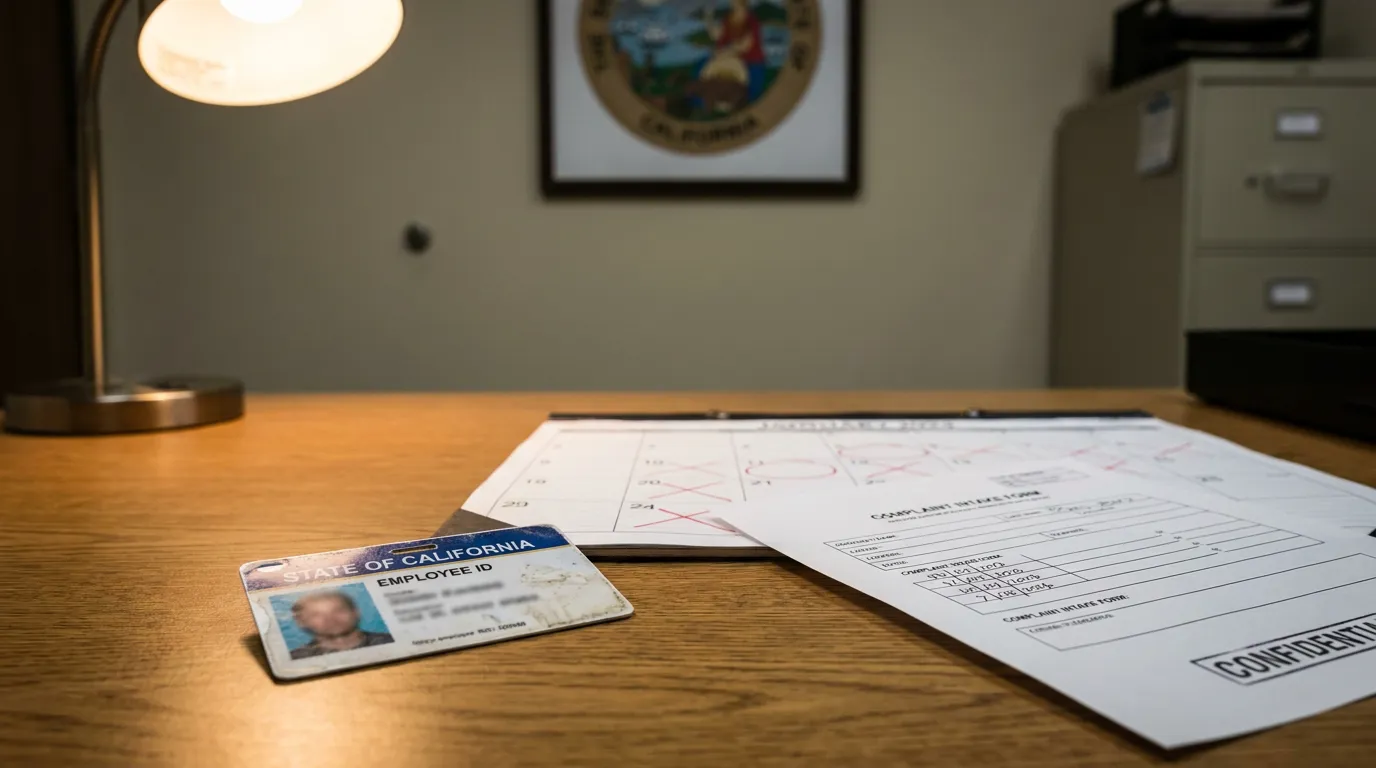
Why Government Workers Play by Different Rules
Public employees encounter an extra procedural step that private-sector workers do not. In California, workplace harassment is prohibited under the Fair Employment and Housing Act (FEHA), enforced by the state civil rights agency, alongside federal Title VII enforced by the Equal Employment Opportunity Commission. When your employer is a public entity such as a city or school district, the California Government Claims Act layers on additional requirements for certain related claims before you can sue.
The core issue is the presentment requirement. Under California Government Code Section 911.2, a claim against a public entity for personal injury must generally be presented within six months after the cause of action accrues. This six-month deadline is much shorter than the civil statute of limitations that most private employees rely on. Critically, California courts have held that a FEHA harassment claim itself is exempt from this presentment requirement because FEHA has its own comprehensive administrative process; the six-month rule instead reaches related common-law claims, such as intentional infliction of emotional distress or wrongful termination in violation of public policy.
💡 Pro Tip: If you suspect your employer is a public entity, treat the six-month window as your working deadline from day one.
The Government Claims Act Deadline That Catches People Off Guard
The Government Claims Act six-month presentment rule is one of California’s most unforgiving deadlines. Under Government Code Section 911.2, the clock generally starts when the cause of action accrues, and the public entity is entitled to reject a late claim. If you miss the window, Government Code Section 911.3(a) authorizes the public entity to send a written rejection notice, and your only recourse is to apply for leave to present a late claim under Sections 911.4 through 912.2 and Section 946.6.
Courts interpret late-claim relief narrowly. Relief may be available only in limited circumstances, such as excusable neglect, and can be denied. You can review the statutory framework in the state’s official text of the Government Claims Act presentment rules.
The interplay between the two systems deserves careful attention. A worker who wrongly assumes the six-month rule bars a pure FEHA harassment claim may give up prematurely, while one who assumes no government claim is required may lose valuable common-law claims. Coordinating both tracks is essential.
How the FEHA Statute of Limitations Fits Alongside the Claims Act
FEHA and the Government Claims Act run on parallel tracks. Assembly Bill 9, known as the SHARE Act, extended the deadline to file a harassment complaint with the state civil rights agency from one year to three years, though it did not revive claims that had already lapsed.
That three-year FEHA window governs the harassment claim itself, but not accompanying common-law claims. A properly exhausted FEHA harassment claim is not subject to the six-month presentment rule. Related common-law claims, however, must still be presented to the public entity within six months of accrual. Under Government Code Section 12965, once the Civil Rights Department issues a right-to-sue notice, an aggrieved person generally has one year to file a civil action on the FEHA claim.
Here is a simplified comparison of the deadlines that commonly matter:
| Deadline | Governing Authority | Typical Time Frame |
|---|---|---|
| Government claim presentment | Gov. Code § 911.2 | 6 months after accrual |
| FEHA administrative complaint | AB 9 / FEHA | Up to 3 years |
| Federal EEOC charge | Title VII | 180 days (general rule) |
💡 Pro Tip: Calendar the earliest applicable date, which for public employees is usually the six-month presentment deadline, and build in a cushion.
When Harassment Becomes Legally Actionable
Not every unpleasant workplace interaction meets the legal threshold for a harassment claim. Harassment generally becomes illegal when it is so frequent or severe that it creates a hostile or offensive work environment, or when it results in an adverse employment decision such as a demotion or termination. Understanding this threshold matters because it affects when your cause of action accrues and when the deadline clock begins.
Timing gets complicated when multiple events occur. When more than one discriminatory event takes place, a deadline can apply separately to each discrete act, so an earlier act may become time-barred even if a later act is timely. The continuing violation doctrine can, in some circumstances, treat a series of related and reasonably frequent acts as a single course of conduct. Because the analysis is fact-specific, public employees should track each incident individually.
- Document each incident with dates, times, witnesses, and written communications.
- Note when you reported the conduct and how the employer responded.
- Preserve emails, texts, and performance records that support your account.
💡 Pro Tip: Keep documentation outside your work accounts. Losing access to a government email system after separation can make evidence harder to retrieve.
Training Rules That Show Public Employers Are Covered
California law makes clear that government workers are protected. FEHA, codified in part at Government Code Section 12950.1, requires employers with five or more employees, including government employers in Redondo Beach, to provide at least two hours of harassment prevention training to supervisory employees and one hour to non-supervisory employees, updated every two years. The statute mandates that training cover gender identity, gender expression, and sexual orientation-based harassment.
That required training must address the remedies available to victims. California Government Code Section 12950.1 specifies that required training and education shall include information and practical guidance regarding the federal and state statutory provisions concerning the prohibition against and the prevention and correction of sexual harassment and the remedies available to victims of sexual harassment in employment; the employer-training mandate (two hours for supervisory employees and one hour for nonsupervisory employees) appears in a different subdivision of the statute. Many public employees remain unaware that while their FEHA harassment claim is exempt from the Government Claims Act, related common-law claims run on a much shorter six-month presentment track.
💡 Pro Tip: If you were never trained or your employer skipped required updates, note that. Gaps in prevention efforts can be relevant to whether it took reasonable steps to prevent harassment.
Practical Steps to Protect Your Claim in Redondo Beach
Acting early is the single most reliable way to protect a government worker harassment claim. Because the six-month presentment rule arrives quickly for accompanying common-law claims, workers who suspect they work for a public entity should move promptly to identify accrual dates and file any required government claim. A knowledgeable Redondo Beach harassment lawyer can help map both the claims-act and FEHA timelines to your specific facts.
Coordinating the administrative process with civil litigation is critical. Filing a government claim and filing an administrative complaint are distinct from filing a civil lawsuit, and each has its own prerequisites. You can learn more about how to request an immediate right to sue in a discrimination matter.
Frequently Asked Questions
-
Does the six-month deadline apply to every public employee?
A pure FEHA harassment claim is exempt from the Government Claims Act’s six-month presentment rule, but related common-law claims are not. The analysis depends on the nature of the claim and how it accrued.
-
What happens if I miss the government claims deadline?
For claims requiring presentment, a late claim can be rejected in writing under Government Code Section 911.3(a). Your remaining option is generally to apply for leave to present a late claim, which courts consider narrowly and may deny.
-
Is the FEHA three-year deadline the same as the claims deadline?
No. AB 9 extended the FEHA administrative filing period to three years, governing the harassment claim itself. The separate six-month presentment requirement applies to accompanying common-law claims.
-
How does the federal EEOC deadline compare?
Under the general federal rule you must file a charge within 180 calendar days, but in states like California that have their own fair-employment agency, that period extends to 300 days. Weekends and holidays count, though a deadline falling on a weekend or holiday rolls to the next business day, as explained in the agency’s guidance on time limits for filing a charge.
-
Can I file an administrative complaint without a lawyer?
Yes, filing an administrative complaint is generally straightforward and can be done online or by phone. Coordinating multiple deadlines is where public employees most often benefit from guidance.
Putting the Pieces Together Before Time Runs Out
For government workers in Redondo Beach, the harassment deadline puzzle comes down to respecting two clocks at once. A FEHA harassment claim is governed by the longer administrative window under AB 9 and the right-to-sue framework of Government Code Section 12965, while related common-law claims generally demand presentment within six months under Government Code Section 911.2. Because these rules interact and courts read late-claim exceptions narrowly, the safest approach is to treat the earliest applicable deadline as controlling and to document everything along the way. The california workplace harassment claim filing deadline statute of limitations is not one number but a set of overlapping timelines, and understanding that distinction can preserve your rights.
If you believe you have experienced workplace harassment as a public employee, do not let a procedural deadline decide your case. Connect with Kent | Pincin by calling (310) 424-4991 or by sending a message through the firm’s confidential case review request to discuss how these deadlines may apply to your situation.