
Can Employees Sue for Harassment at Work in Redondo Beach?
Understanding Your Right to Take Legal Action Against Workplace Harassment
Key Takeaways: Yes, employees in Redondo Beach can sue for harassment at work when the conduct violates California’s Fair Employment and Housing Act (FEHA), which protects workers from severe or pervasive harassment tied to a protected characteristic. FEHA applies to nearly every workplace, with harassment claims available against employers of virtually any size. You do not need to be fired or demoted to bring a claim, a hostile work environment alone may be enough. California uniquely allows you to hold the individual harasser personally liable, not just your employer, and protects against same-sex harassment and retaliation for reporting. However, strict filing deadlines apply, and most claims require filing an administrative complaint with the Civil Rights Department before going to court. Because outcomes are highly fact-dependent, documenting incidents and understanding your rights are essential first steps.
Yes, employees in Redondo Beach can sue for harassment at work when the conduct violates California law. The state’s Fair Employment and Housing Act (FEHA) gives workers powerful protections against hostile treatment tied to a protected characteristic. If you have faced unwelcome, severe, or pervasive harassment, you may have grounds to pursue a claim against your employer and often against the individual who harassed you.
If you believe you have been harassed on the job, the team at Kent | Pincin is ready to help you understand your options. Call our office at (310) 424-4991 or reach out through our online contact page to discuss your circumstances.
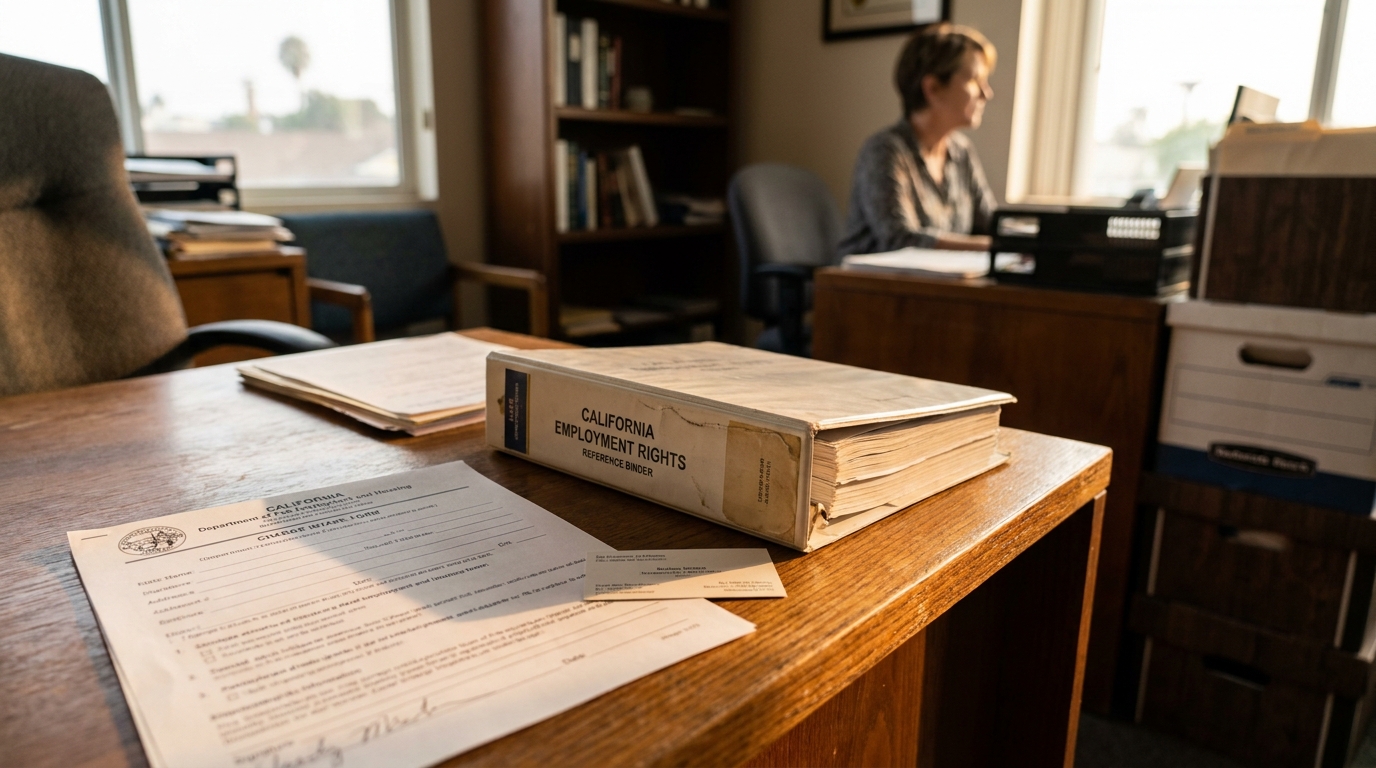
What FEHA Protects and Who It Covers
California’s harassment protections are broader than most employees realize. Under FEHA, it is unlawful for an employer or any other person to harass an employee because of a protected characteristic. Protected characteristics include race, religious creed, color, national origin, ancestry, physical disability, mental disability, medical condition, genetic information, marital status, sex, gender, gender identity, gender expression, age, sexual orientation, reproductive health decisionmaking, and veteran or military status, as set out in California Government Code § 12940(j)(1). This sweeping list means Redondo Beach workers are shielded across a wide range of personal attributes.
The reach of FEHA extends to nearly every workplace in the area. While Title VII, the federal law, generally applies only to employers with 15 or more employees, California’s standard is far lower. For harassment specifically, a claim can be brought against an employer of nearly any size. The statutory definition of "employer" reaches any person regularly employing one or more persons under Government Code § 12940(j)(4)(A). You can review the full statutory text of these FEHA harassment provisions directly through the California Legislature’s website.
💡 Pro Tip: Write down each incident as soon as it happens, including dates, times, witnesses, and exactly what was said or done. Contemporaneous notes often carry more weight than memories recalled months later.
When Can I Sue for Harassment at Work?
You generally can sue for harassment at work when the conduct rises to the level of a legally actionable hostile work environment. Under FEHA, a hostile work environment exists when unwelcome conduct based on a protected characteristic is sufficiently severe or pervasive to alter the conditions of employment. Importantly, the conduct does not need to be both severe and pervasive. Either alone can be enough. This standard echoes California’s civil jury instructions, which explain that harassment must be sufficiently severe or pervasive to alter the conditions of the victim’s employment and create an abusive working environment.
You do not need to lose a job benefit to bring a claim. Many workers wrongly assume they must be fired, demoted, or denied a raise before they can act. Under Government Code § 12940(j)(1), loss of tangible job benefits shall not be necessary in order to establish harassment. A hostile work environment, standing alone, may support a lawsuit even when your paycheck never changed.
Whether conduct crosses the legal line is highly fact-dependent. Courts examine the totality of the circumstances, including frequency, severity, and whether the behavior unreasonably interfered with your work. A single offensive remark is generally not enough unless it is severe, though context can change that result.
Who Can Be Held Responsible
Liability under FEHA can extend to several different parties. When a supervisor is the harasser, the employer is generally strictly liable, meaning the company can be responsible regardless of whether it knew. For harassment by coworkers or non-employees, liability attaches if the employer knew or should have known about the conduct and failed to take immediate and appropriate corrective action.
California uniquely allows you to hold the individual harasser personally accountable. Unlike Title VII, where liability generally rests with the employer alone, FEHA permits claims directly against the person who harassed you. Under Government Code § 12940(j)(3), an employee of an entity subject to this subdivision is personally liable for any harassment prohibited by this section that is perpetrated by the employee, regardless of whether the employer or covered entity knows or should have known of the conduct and fails to take immediate and appropriate corrective action. This means a Redondo Beach worker may potentially pursue both the employer and the individual involved.
| Source of Harassment | Employer Liability Standard |
|---|---|
| Supervisor | Generally strict liability |
| Coworker | Liable if it knew or should have known and failed to act |
| Non-employee (client, vendor) | Liable if it knew or should have known and failed to act |
Employers cannot escape responsibility simply by pointing to required training. California law mandates harassment prevention training, but compliance is not a complete shield. Under Government Code § 12950.1(c), an employer’s compliance with this section does not insulate the employer from liability for sexual harassment of any current or former employee or applicant.
💡 Pro Tip: Report harassment in writing through your employer’s official channels when it is safe to do so. A documented report can later help show the company knew about the problem and what it did, or failed to do, in response.
Sexual Harassment, Same-Sex Conduct, and Retaliation
Sexual harassment under California law does not require sexual desire. This is a critical point for workers experiencing same-sex harassment or gender-based hostility. Government Code § 12940(j)(4)(C) provides that harassment because of sex includes sexual harassment, gender harassment, and harassment based on pregnancy, childbirth, or related medical conditions, and that sexually harassing conduct need not be motivated by sexual desire. Hostility rooted in gender is fully covered even when no romantic or sexual interest exists.
Retaliation for complaining about harassment is separately prohibited. Both FEHA and Title VII protect workers who speak up. You do not have to ultimately prove that harassment occurred to be protected from retaliation. It is generally enough that you had a reasonable, good-faith belief that the conduct was unlawful. If your employer punished you for reporting, that retaliation may form the basis of an additional claim.
Deadlines and Practical Steps Before You File
Timing matters, and California’s filing deadlines are strict. Most FEHA claims require you to first file an administrative complaint with the Civil Rights Department before suing in court. California extended the deadline to file that administrative complaint to three years from the date of the alleged unlawful conduct, and you can read more about how this extended filing deadline developed. Courts interpret tolling and discovery exceptions narrowly, so deadlines should not be treated as automatic. Missing a deadline can permanently bar an otherwise valid claim.
Preparing your case well in advance can make a meaningful difference. Strong harassment claims often rest on documentation, witness statements, and a clear timeline. Consider the following steps:
- Save emails, texts, and messages that reflect the harassment.
- Identify coworkers who witnessed the conduct.
- Keep copies of any complaints you submitted and responses you received.
- Note any changes in your treatment after you reported.
If you want to move quickly, you can learn how to obtain an immediate right to sue in certain situations, which may allow you to proceed to court sooner.
💡 Pro Tip: Avoid deleting workplace communications, even ones that feel embarrassing or minor. Preserving the full record helps your attorney evaluate the strength of your potential claim.
Frequently Asked Questions
1. Can I sue for harassment at work if I was not fired or demoted?
Yes. Loss of tangible job benefits shall not be necessary in order to establish harassment under Government Code § 12940(j)(1). A hostile work environment alone may be enough, depending on the facts.
2. Does my employer have to be a certain size for FEHA to apply?
Generally no for harassment claims. For purposes of harassment, employer means any person regularly employing one or more persons under Government Code § 12940(j)(4)(A), making FEHA far broader than federal law.
3. Can I sue the individual who harassed me, not just my employer?
Often yes. Under Government Code § 12940(j)(3), an employee who perpetrates harassment can be held personally liable for any harassment prohibited by this section, regardless of what the employer knew.
4. Is same-sex harassment covered under California law?
Yes. Sexually harassing conduct need not be motivated by sexual desire under Government Code § 12940(j)(4)(C), so same-sex and gender-based harassment are covered.
5. What if I reported harassment and was punished for it?
You may have a retaliation claim. An employee generally need only show a reasonable belief that the reported conduct was unlawful to be protected from retaliation.
Moving Forward With Confidence
Deciding whether to pursue a harassment claim is a personal decision that depends heavily on your specific facts. California gives Redondo Beach employees strong tools, from broad protected categories to individual liability and meaningful retaliation safeguards. Still, every claim involves nuance around severity, pervasiveness, deadlines, and proof. The most important step is understanding your rights so you can make an informed choice about how to protect yourself.
If you are ready to explore your workplace harassment legal options, a knowledgeable workplace harassment lawyer Redondo Beach at Kent | Pincin can help you evaluate your situation with care and discretion. Call (310) 424-4991, visit Kent | Pincin online, or send us a message through our confidential contact form to take the next step today.