
Can Madison Families File a Third-Party Claim After a Workplace Death?
Understanding Your Options After a Fatal Job Site Accident in Dane County
Key Takeaways: Yes, Madison families can often pursue a third-party claim after a workplace death, because Wis. Stat. § 102.29(1) preserves the right to bring a tort action against a non-employer party even when workers’ compensation benefits are claimed. Potential third parties include general contractors, subcontractors, equipment manufacturers, property owners, negligent drivers, and maintenance companies, though the statute bars most claims against co-employees and certain related employers. Wisconsin’s wrongful death statute, § 895.04, sets a hierarchy determining which surviving relatives may recover and caps noneconomic damages for loss of society and companionship. § 803.03(2)(a) requires joining subrogation claimants such as the comp insurer, whose reimbursement rights follow § 102.29(1)(b). Liability must be proven under Wisconsin’s negligence framework, and § 895.045(1) allows recovery only if the worker’s negligence was not greater than the defendant’s, with damages reduced proportionally. Deadlines are strict: three years from death under § 893.54(1m), but only two years when a motor vehicle caused the death.
Yes, in many cases a Madison family can pursue a third-party claim after a workplace death, even after filing for workers’ compensation. Under Wis. Stat. § 102.29(1), a claim for compensation "shall not affect the right of the employe, the employe’s personal representative, or other person entitled to bring action, to make claim or maintain an action in tort against any other party for such injury or death." This preserved lawsuit is a "3rd party" action and matters enormously because workers’ compensation death benefits are limited by statute while a tort recovery may include damages comp does not pay, such as loss of society and companionship.
If your family lost someone in a job site fatality in Dane County, the team at Kent | Pincin can help you evaluate whether a viable claim exists. Call 608.999.4954 or reach out to our team today to discuss your situation.
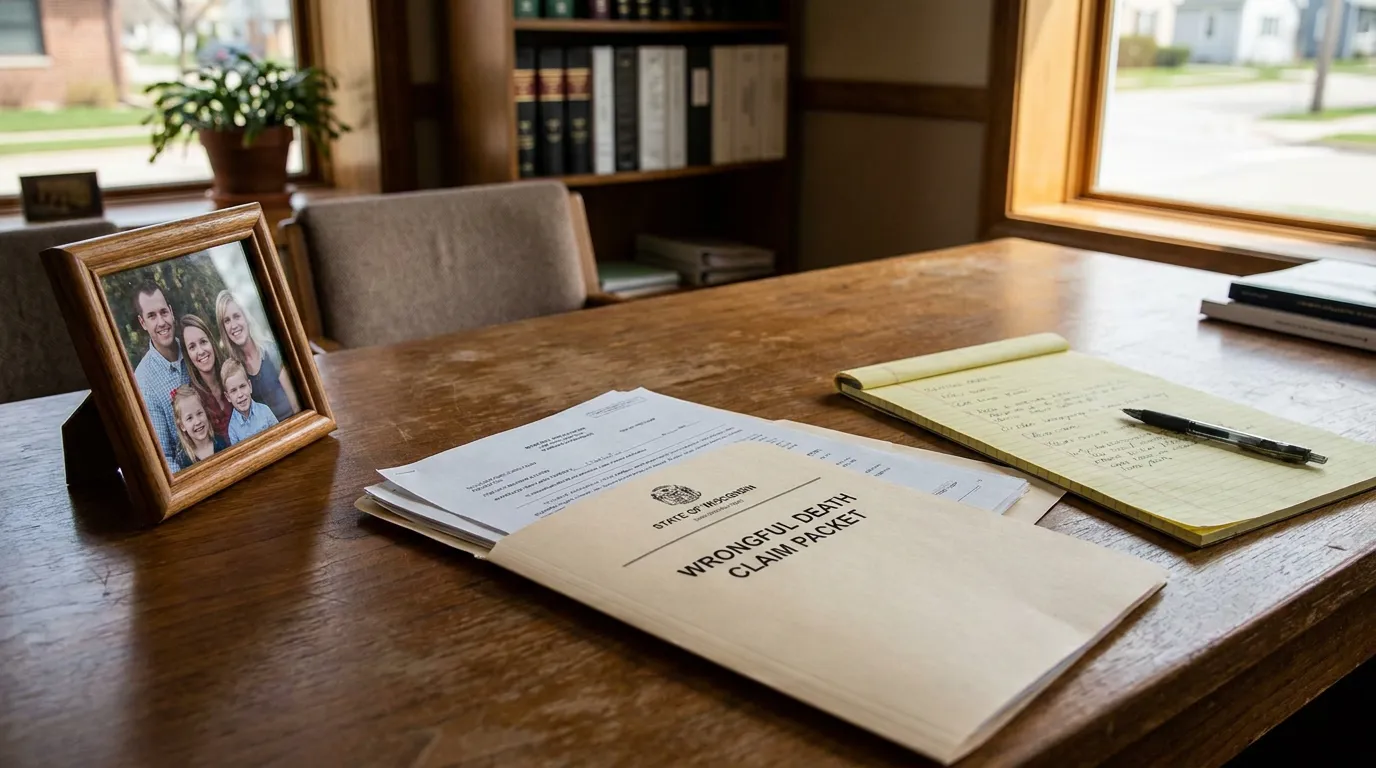
How Wisconsin 102.29 Third Party Liability Works Alongside Workers’ Compensation
Workers’ compensation is generally the exclusive remedy against an employer, but it is not the end of the analysis. Wisconsin’s comp system trades fault-based litigation against the employer for no-fault benefits. Comp exclusivity does not shield everyone else who contributed to a death on a job site.
The scope of that remedy is narrower than many families expect. Recent court decisions have affirmed that the authority granted by section 102.29(1) is limited to actions "in tort." A family cannot re-argue the comp claim in circuit court. A claim must establish negligence, a defective product, or another recognized tort by a party other than the employer. The statute also carves out several defendants: co-employees are generally immune unless the claim involves negligent operation of a motor vehicle not owned or leased by the employer or an assault intended to cause bodily harm, and § 102.29 further limits actions against temporary help agencies, employers who loan employees, and certain contractors who have paid or are liable for compensation. This Marquette Law Review analysis explains how these actions are structured.
Who Might Be a "Third Party" in a Madison Work Accident
Potential defendants depend on the facts and require early investigation. Common categories include:
- General contractors, subcontractors, or other trades on the same site who owed independent safety duties
- Equipment manufacturers or component suppliers when a machine or safety device failed
- Property owners who controlled a hazardous condition
- Negligent drivers involved in a fatal vehicle crash during employment
- Maintenance or service companies responsible for inspecting equipment
💡 Pro Tip: Photographs, incident reports, equipment serial numbers, and contractor identities can become difficult to obtain months later. Preserving that information early may protect a claim you don’t yet know you have.
Family Eligibility Under Wisconsin’s Wrongful Death Statute
Not every grieving relative has standing to recover. The Wisconsin wrongful death statute establishes a statutory hierarchy under sub. (2) that distinguishes which surviving family members may recover and in what order, generally placing surviving minor children first, followed by the surviving spouse or domestic partner, then lineal heirs, and then brothers and sisters. Section 895.04(4) caps damages for loss of society and companionship at $350,000 for an adult and $500,000 for a minor child.
Meaningful exceptions exist. In Force v. American Family Mutual Insurance Co., 2014 WI 82, the Wisconsin Supreme Court concluded that a decedent’s minor children could recover for loss of society and companionship under certain circumstances, notwithstanding the surviving spouse’s position in the hierarchy. Eligibility questions frequently turn on marital status, adoption, dependency, and the identity of the personal representative.
Joinder, Subrogation, and How a Recovery Gets Divided
Wis. Stat. § 803.03(2)(a) requires joining persons who hold subrogation, derivative, or assignment claims. That means the workers’ compensation insurer that paid death benefits, along with consortium claimants, generally must be brought into the action. Distribution of proceeds follows § 102.29(1)(b): reasonable costs of collection come off the top, one-third of the remainder goes to beneficiaries, the employer or carrier is reimbursed for compensation paid and payable, and any balance goes to beneficiaries. Families are often surprised the comp carrier may assert a claim against a tort recovery.
Proving Negligence in a Wisconsin Third-Party Death Case
Wisconsin analyzes negligence under a distinctive framework. In Wisconsin, everyone owes a general duty of ordinary care to the world at large, though courts may nonetheless preclude liability on public policy grounds even where negligence and cause are established.
Duty analysis can shift depending on what the third party did or failed to do. On a construction site or in a manufacturing facility, liability often rests on a failure to inspect, warn, barricade, or coordinate safety rather than an affirmative dangerous act. Whether a particular contractor owed and breached a duty is generally a fact-intensive question courts and juries evaluate case by case, and Wisconsin’s safe place statute, § 101.11, can impose additional obligations on employers and owners of public buildings and places of employment.
Comparative Negligence and Its Effect on Recovery
Wisconsin follows a modified comparative negligence rule. Under Wis. Stat. § 895.045(1), contributory negligence does not bar recovery for negligence resulting in death or injury "if that negligence was not greater than the negligence of the person against whom recovery is sought," though damages are diminished in proportion to attributed fault. Wisconsin courts compare the claimant’s negligence against each defendant individually rather than against defendants combined, so a worker found 40% at fault may recover from a defendant found 60% negligent but not from one found 30% negligent. A defendant will often argue the deceased worker bore substantial responsibility. Careful reconstruction of the incident and the safety obligations each party held frequently determines how a jury allocates fault.
Deadlines That Can End a Claim Before It Begins
Wisconsin imposes firm filing deadlines, and missing one generally bars the claim entirely. Under Wis. Stat. § 893.54(1m), actions for injuries to the person and actions to recover damages for death caused by wrongful act, neglect, or default must be commenced within three years or be barred. Case law defines the "date of accrual" for wrongful death as the date of death. Our discussion of the 3-year wrongful death deadline walks through the mechanics.
One significant exception involves motor vehicles. Under Wis. Stat. § 893.54(2m), when an auto accident causes injuries resulting in death, the wrongful death lawsuit must be filed within two years from death. Other deadlines can apply, including shorter notice-of-claim requirements for governmental bodies and the statute of repose for improvements to real property. Because many workplace fatalities involve delivery vehicles, service trucks, or road work zones, these shortened periods catch families off guard.
| Type of Claim | Governing Statute | General Deadline |
|---|---|---|
| Wrongful death, non-vehicle | Wis. Stat. § 893.54(1m) | 3 years from date of death |
| Wrongful death, motor vehicle involved | Wis. Stat. § 893.54(2m) | 2 years from date of death |
| Personal injury (survival-related claims) | Wis. Stat. § 893.54(1m) | 3 years |
A discovery rule may apply in limited circumstances, but should never be assumed. Wisconsin case law recognizes the discovery rule can permit a claim to accrue when the injury and its cause are discovered or, with reasonable diligence, should have been discovered. Wisconsin courts interpret such exceptions narrowly.
💡 Pro Tip: The workers’ compensation process and a civil third-party lawsuit run on separate tracks with separate deadlines. Filing a comp claim does not preserve your right to sue a negligent third party.
Practical Steps for Families Facing a Job Site Fatality
Early decisions shape what evidence remains available months later. OSHA and internal employer investigations may generate useful records, but those administrative processes are distinct from a civil lawsuit and do not substitute for one. Requesting incident documentation, identifying every company present, and securing witness contact information are steps that can strengthen a later claim.
Families should be cautious about early communications from insurers. Adjusters for a contractor’s or manufacturer’s carrier may contact survivors quickly. Recorded statements given before the facts are understood can complicate a comparative negligence analysis later. Working with a wisconsin 102.29 third party liability lawyer before those conversations occur is advisable.
Frequently Asked Questions
1. Does filing for workers’ compensation prevent a third-party claim?
No. Wis. Stat. § 102.29(1) provides that a compensation claim does not affect the right to maintain a tort action against another party. The statute limits claims against co-employees and certain related employers.
2. Can we sue the employer directly for a workplace death?
In most situations, workers’ compensation is the exclusive remedy against the employer. Limited statutory exceptions exist, and Wisconsin courts have recognized narrow circumstances in which exclusivity does not apply.
3. Who receives the money from a third-party recovery?
Distribution is governed by § 102.29(1)(b) and § 803.03(2)(a). After collection costs, one-third of the balance goes to beneficiaries before the carrier is reimbursed. The § 895.04 hierarchy and its damages caps also affect allocation among surviving family members.
4. What if the worker was partly at fault?
Under Wis. Stat. § 895.045(1), recovery is not barred so long as the claimant’s negligence was not greater than the party’s from whom recovery is sought, with damages reduced proportionally. Because the comparison is made defendant by defendant, the allocation of fault among multiple parties can determine which defendants remain liable.
5. How long do we have to file a 102.29 claim in Madison WI?
Generally three years from the date of death under Wis. Stat. § 893.54, or two years if a motor vehicle accident caused the death. Shorter notice periods can apply to claims against governmental entities.
Moving Forward With Clarity After a Devastating Loss
Wisconsin law does not force families to choose between workers’ compensation benefits and holding a negligent third party accountable. Between the preserved tort remedy under § 102.29(1), the wrongful death framework of § 895.04, the comparative negligence standard of § 895.045(1), and the deadlines in § 893.54, the path is well defined but unforgiving of delay.
If you are considering a third-party claim after a workplace death, the attorneys at Kent | Pincin are prepared to review the circumstances and explain your options. Call 608.999.4954 or schedule a consultation now to get started.