
What Is NHTSA’s Standing General Order on Crash Reporting in Nebraska?
Federal Crash Data and Your Nebraska Injury Claim: A Plain-English Guide
Key Takeaways: NHTSA’s Standing General Order (SGO 2021-01), first issued June 29, 2021 and amended in 2021, 2023, and 2025, requires named manufacturers to report crashes involving automated driving systems or SAE Level 2 driver assistance features on publicly accessible roads, including Nebraska. A crash becomes reportable when the system was in use within 30 seconds of collision and meets severity criteria, with expedited timelines for serious incidents. The data helps regulators evaluate defects, not resolve individual claims. Published crash counts have significant limits, they’re self-reported, sometimes redacted, subject to changing criteria, and not normalized for exposure. Nebraska’s driver duties under Neb. Rev. Stat. § 60-697 and crash reports under § 60-699 operate separately from federal manufacturer reporting. For injured Nebraskans, federal crash entries are useful leads, but event data recorder downloads, sensor logs, and software histories typically decide product liability cases, making early preservation critical.
If you were hurt by a vehicle using automated or advanced driver assist features, there may be a federal record of that crash. Under a nationwide directive from the National Highway Traffic Safety Administration, certain manufacturers and fleet operators must report qualifying crashes. That directive applies to collisions throughout Nebraska, and the data it generates can matter when proving a defect.
If you or a family member was injured in a crash involving an automated or semi-automated vehicle, the team at Kent | Pincin can help you understand what evidence exists and how quickly it needs preservation. Call (402) 243-5535 or contact us now to discuss your situation.
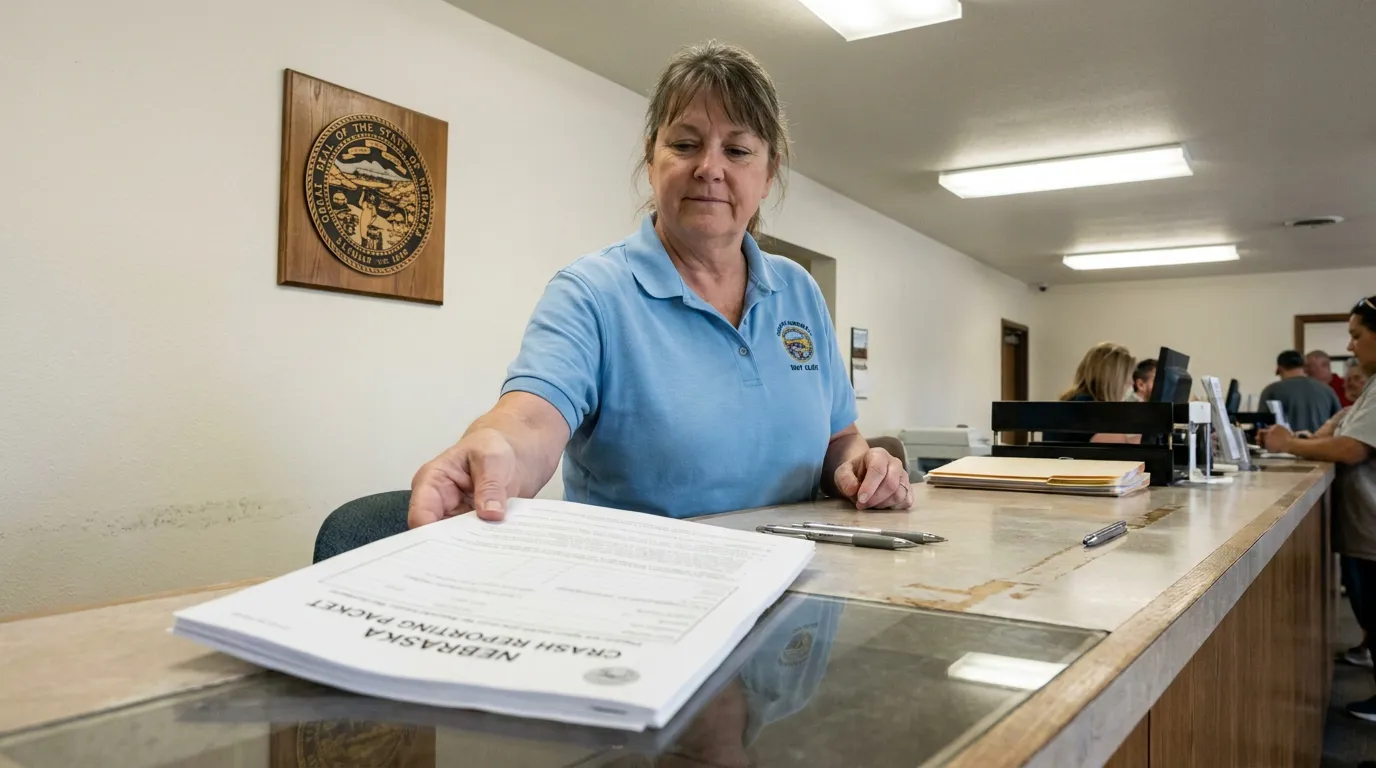
How the NHTSA Standing General Order Crash Reporting Program Works
The Standing General Order (SGO 2021-01) is a federal directive compelling named companies to report certain crashes to safety regulators. According to NHTSA, the agency has issued an order requiring identified manufacturers and operators to report certain crashes involving vehicles equipped with automated driving systems or SAE Level 2 advanced driver assistance systems. It applies only to named entities and does not create a private cause of action, but it generates information that may become relevant in defect cases.
The Order was first issued June 29, 2021, and reaches crashes on publicly accessible roads throughout the United States. NHTSA amended the Order in 2021 and 2023, with a Third Amended version taking effect June 16, 2025. This geographic scope is why Nebraska crashes, whether on I-80 near Gretna, residential streets in Bellevue, or Sandhills highways, fall within it.
Not every crash involving driver assistance technology is reportable. Generally, a crash becomes reportable when the automated driving system or Level 2 feature was in use within 30 seconds of the crash and the incident met severity criteria for that system category. The most serious categories, including fatalities, hospital transport, vulnerable road user involvement, and airbag deployment, generally require expedited reporting, with less serious qualifying crashes captured in periodic reports.
Why the Federal Government Collects This Data
NHTSA has explained the order’s purpose is to obtain timely notification of real-world crashes. The agency issued the Order to evaluate whether these systems meet statutory obligations to ensure vehicles are free of defects posing unreasonable safety risks. If NHTSA finds a safety defect, it will take action to remove unsafe vehicles from roads or require remedies.
That regulatory purpose differs from your purpose as an injured person. NHTSA seeks fleet-wide patterns justifying investigation, recall, or enforcement. You need proof about one specific crash, meaning the federal dataset is usually a starting point rather than the core of a Nebraska defect claim.
Important Limits on What the Data Can Prove
Understand the built-in limitations before drawing conclusions from published crash counts. NHTSA has cautioned that reporting entities aren’t required to submit vehicle counts, and crash data hasn’t been normalized or adjusted for exposure. A company with more vehicles on the road may report more crashes without being less safe.
Other limitations include:
- Reports are submitted by manufacturers, not independent investigators, and portions may be redacted as confidential business information.
- A report reflects the entity’s account that a system was engaged near the crash; it doesn’t establish the system was defective or caused injuries.
- Narrative fields are often brief; underlying sensor and event data remain in the company’s possession.
- Because reporting criteria have changed with each amendment, counts from different periods aren’t directly comparable.
💡 Pro Tip: Treat federal crash entries as leads, not verdicts. The most useful evidence typically sits in the vehicle’s event data recorder, camera and sensor logs, and software update history.
Nebraska’s Own Crash Reporting Duties Are Separate
Nebraska imposes duties directly on drivers, independent of federal manufacturer reporting. Neb. Rev. Stat. § 60-697 requires drivers involved in accidents resulting in injury or death to stop, identify those involved, exchange information, and render reasonable assistance, with criminal penalties under § 60-698. The operator crash report is governed by Neb. Rev. Stat. § 60-699. Compliance with state driver duties has no bearing on whether a manufacturer owed a federal report.
Nebraska treats crashes as reportable based on damage or injury thresholds. Under § 60-699, operators involved in accidents causing injury, death, or property damage at or above the statutory threshold (currently $1,500) must file a report with the Department of Transportation within 10 days unless a peace officer investigated. The Nebraska DMV administers financial responsibility requirements with its own threshold; failing to comply may lead to license consequences under accident suspension rules.
This administrative process is not a lawsuit. A DMV filing addresses financial responsibility and licensing; a civil product liability action is a separate court proceeding with its own deadlines. Under § 60-699, operator-filed reports are generally not public and inadmissible at trial except to prove reporting compliance, while law enforcement reports are treated differently. For guidance on the state filing window, see our overview of the 10-day Nebraska accident report deadline.
| Feature | Nebraska driver report | Federal Standing General Order |
|---|---|---|
| Who reports | The involved driver or owner | Named manufacturers and operators |
| Trigger | Injury, death, or property damage at or above the statutory threshold, unless a peace officer investigated | Covered ADS or Level 2 ADAS engaged within 30 seconds of a crash meeting the applicable severity criteria |
| Timeline | Generally within 10 days, with proof of financial responsibility for DMV purposes | Varies by severity and by version of the Order, with expedited reporting for the most serious crashes |
| Purpose | Financial responsibility and licensing | Federal defect evaluation and enforcement |
What Federal Reporting May Mean for a Nebraska Defect Claim
Federal crash data can support a Nebraska product liability theory but rarely proves one alone. Under Nebraska law, plaintiffs pursuing defect claims must establish a design defect, manufacturing defect, or failure to warn, along with causation and damages. Federal crash entries may help demonstrate notice, recurrence, or patterns, but admissibility isn’t automatic: courts require substantial similarity and may exclude evidence on relevance, hearsay, or prejudice grounds.
Automated vehicle cases often involve several potentially responsible parties. Claims may implicate the vehicle manufacturer, software developer, fleet or rideshare operator, component supplier, or a human driver who misused a feature. Identifying the right defendants requires technical analysis.
Evidence That Tends to Matter Most
Digital evidence is frequently decisive and can be time-sensitive. Event data recorder downloads, sensor and camera logs, telematics records, over-the-air software update histories, and internal testing documents often carry more weight than eyewitness impressions. Because companies control much of this material, and access may be limited by statute or require court orders, early written preservation demands are advisable.
Qualified engineering and human-factors witnesses typically play central roles. Establishing that a system failed to detect a pedestrian, handed control back abruptly, or was marketed to encourage overreliance requires technical testimony satisfying expert evidence standards. For more on how these claims are built, see our nhtsa standing general order crash reporting lawyer page.
💡 Pro Tip: Photograph the vehicle’s badging, trim level, and visible sensor hardware, and note any driver assist warnings or dashboard messages before impact. Those details help confirm which system was engaged.
Practical Steps After an Automated Vehicle Crash in Nebraska
Organized early steps protect options difficult to recover later. Seek medical evaluation promptly, because treatment gaps challenge causation. Report the crash as state law requires, keep every repair estimate and medical record, and avoid giving recorded statements to manufacturers’ or insurers’ representatives before understanding your rights.
Preservation is the most often missed step. Vehicles get repaired, salvaged, or sold, and electronic data can be overwritten or lost. Written requests that the vehicle and its data be preserved should go out as soon as possible.
Frequently Asked Questions
1. Does the Standing General Order give me a right to sue?
No. The Order is a federal reporting directive, not a liability statute, and doesn’t create a private right of action. Claims in Nebraska rest on state product liability or negligence principles, subject to applicable defenses and deadlines.
2. Will my crash automatically appear in the federal database?
Not necessarily. Reporting obligations apply only to companies named in the Order, and only when crashes meet system-engagement and severity criteria. Many crashes involving driver assistance features fall outside those thresholds.
3. What if the driver assist feature was turned off at impact?
It may still matter. Crashes can be reportable when the system was in use within 30 seconds of collision, and disengagement shortly before impact is itself a fact warranting scrutiny. Whether that supports a defect theory depends on specific data.
4. How long do I have to bring a Nebraska defect claim?
Nebraska imposes statutory limitations periods on product liability and personal injury actions, and the period depends on claim nature, theory pleaded, and parties involved. Product liability claims may also face a separate statute of repose. Limited exceptions such as discovery rules can apply, but courts interpret them narrowly. Government-entity claims carry separate administrative notice requirements, so timing questions should be reviewed promptly with counsel.
Bringing the Federal and State Pictures Together
The Standing General Order created something new in 2021: a national stream of information about crashes involving automated and semi-automated vehicles, though its scope has been revised several times. For injured Nebraskans, that data can help establish context, notice, and patterns, but it’s not a substitute for vehicle-specific technical evidence that generally decides product liability cases. Nebraska’s separate driver duties under § 60-697 and reporting thresholds under § 60-699 operate on a different track, and confusing the two can cost valuable time.
Every automated vehicle crash turns on its own facts, and claim strength usually depends on how quickly underlying data is identified and preserved. If you have questions about a crash involving a self-driving or driver-assist vehicle, Kent | Pincin is available to review what happened. Call (402) 243-5535 or schedule a consultation to get started.